Published on: 2025-11-05
Updated on: 2025-11-07
Market makers, or Dealing Desks, ensure fast trade execution by constantly quoting buy and sell prices
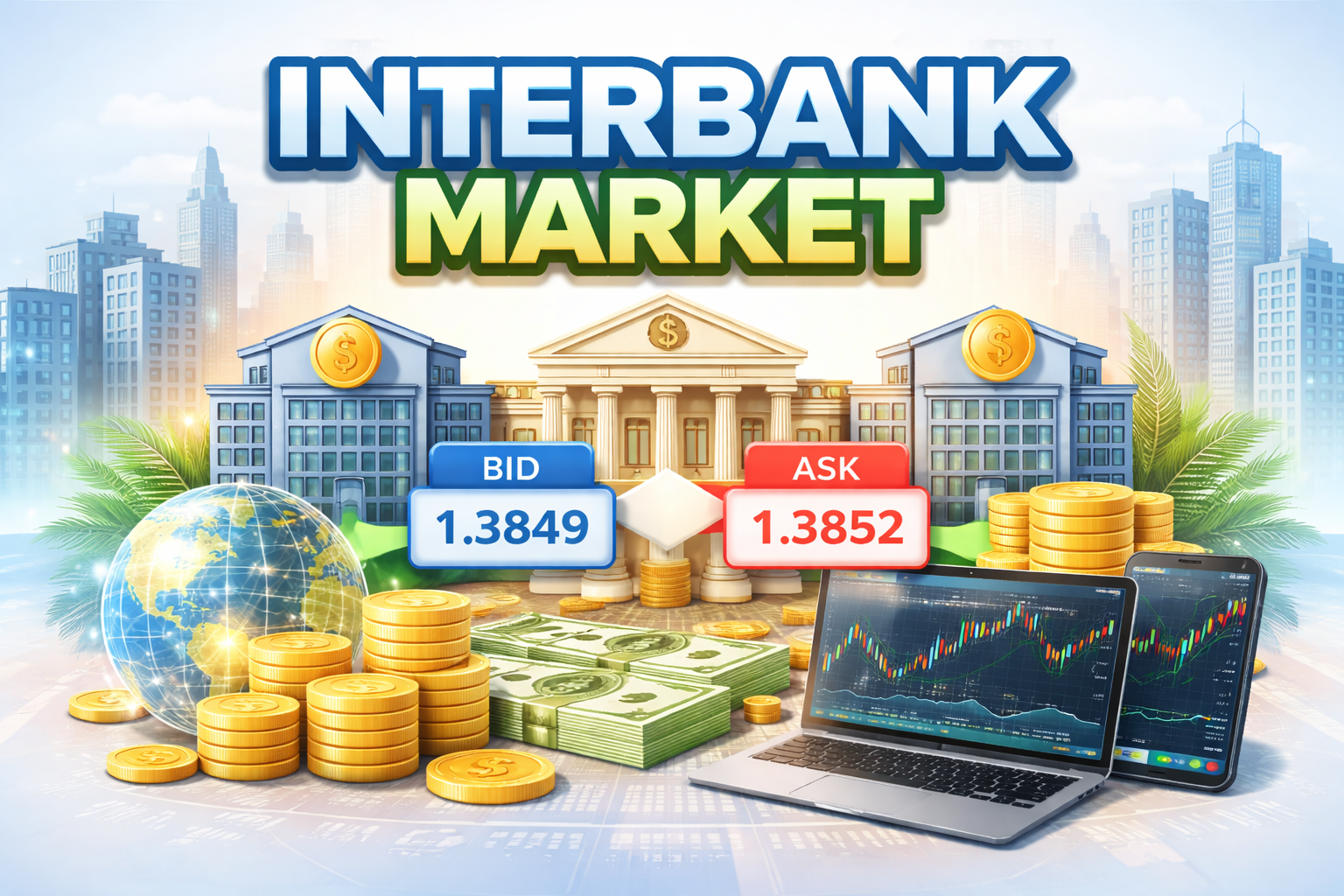
A market maker is a financial institution or broker that continuously provides two prices for a security:
a bid (the price they’re willing to buy at), and
an ask (the price they’re willing to sell at).
By doing this, they make sure that there’s always liquidity in the market, meaning there’s always someone ready to trade with you.
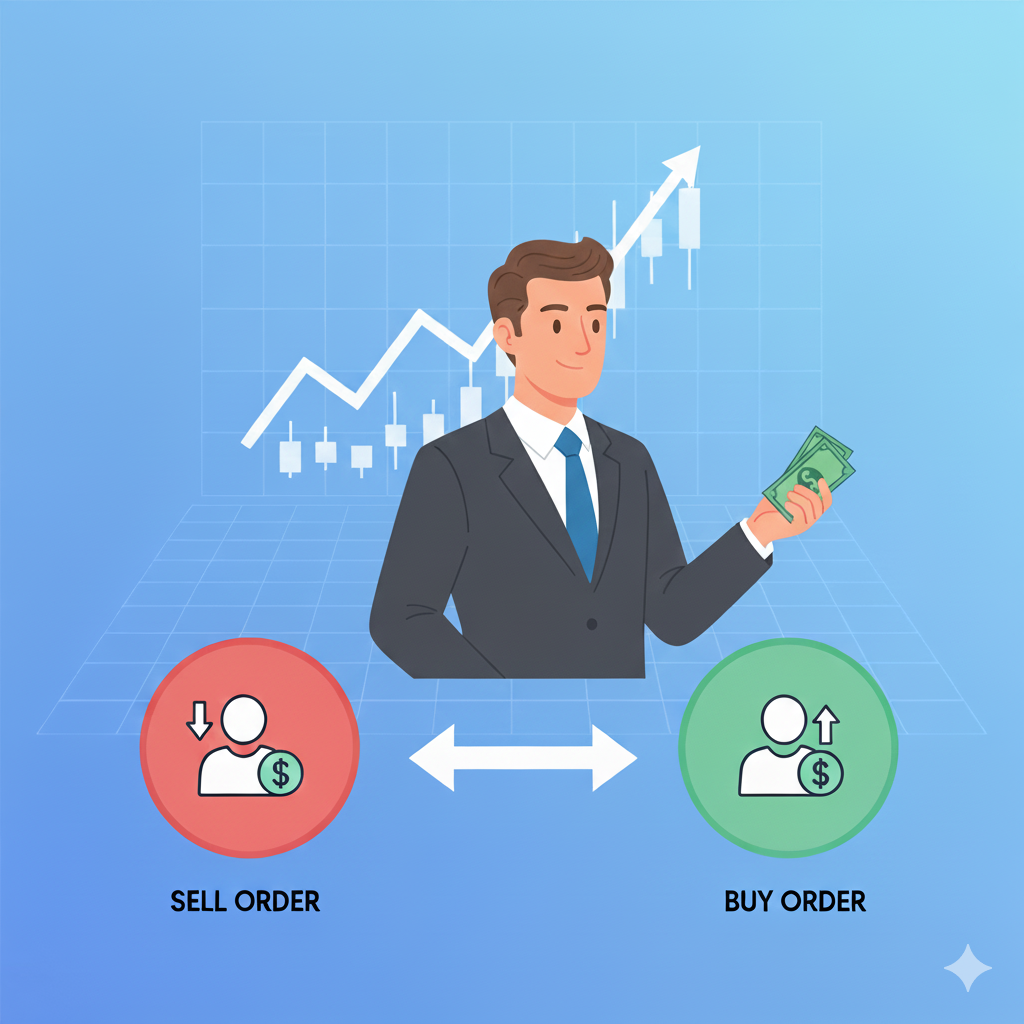
In simple terms, market makers are the middlemen of the trading world. They stand ready to buy when others want to sell, and to sell when others want to buy.
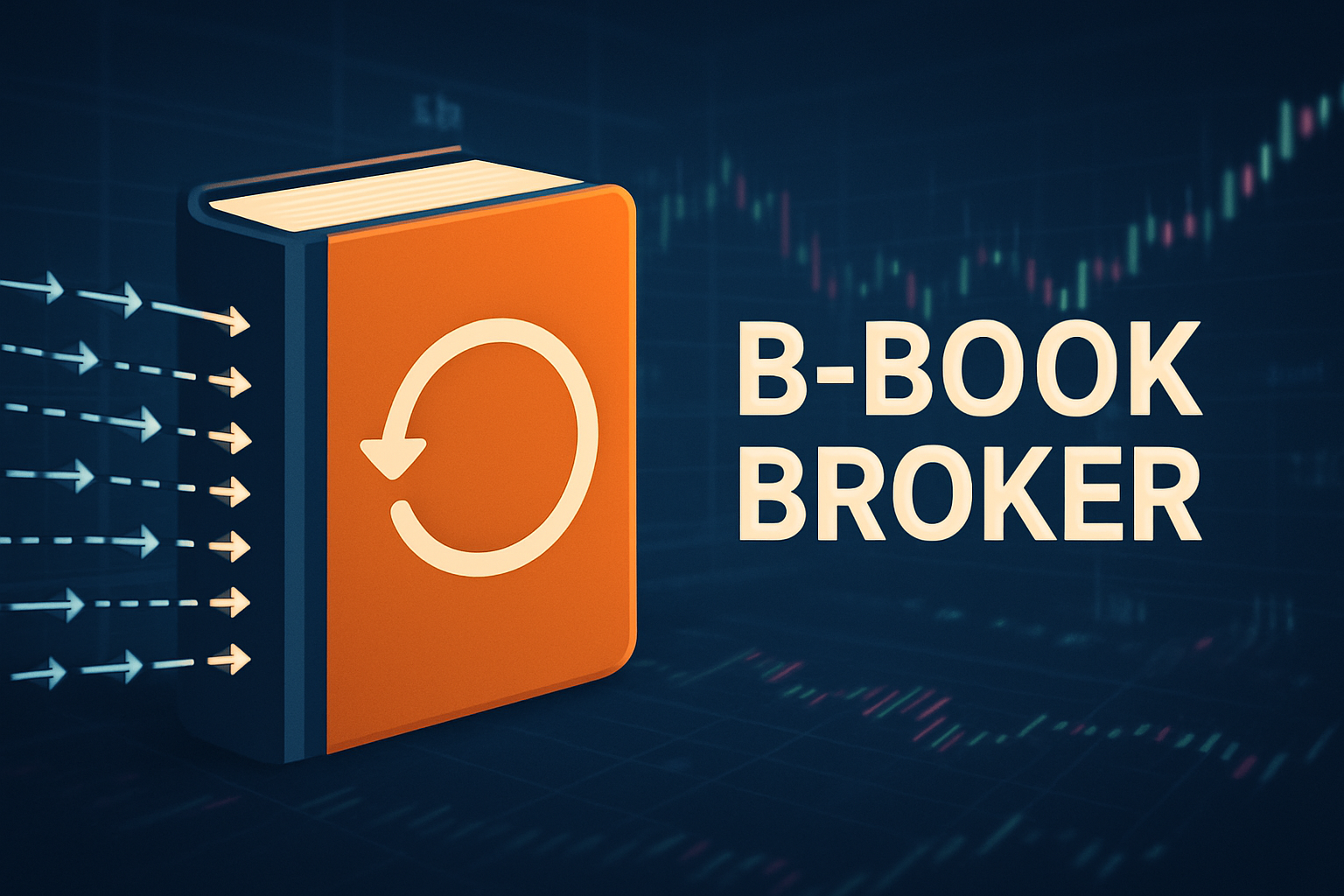
The system they use is often called the B-Book model, where the broker takes the opposite side of a trader’s position to keep trading fast and efficient.
Without market makers financial markets would often “freeze up” as prices could jump sharply or take longer to settle because there wouldn’t always be a willing buyer or seller.
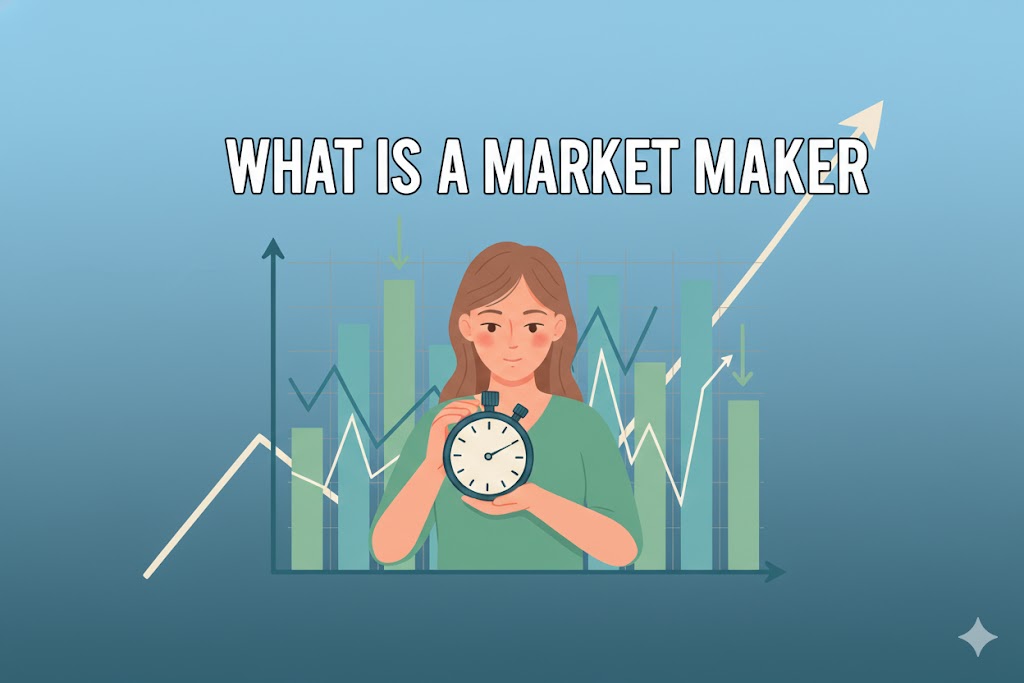
A market maker is a firm or individual that offers both bid and ask prices for a specific asset at all times.
The difference between these two prices, called the bid-ask spread, is the market maker’s profit and a reward for taking on risk.
Market makers are regulated participants on exchanges like the London Stock Exchange (LSE) or NASDAQ, where they’re required to help maintain orderly and liquid trading conditions.
In the forex market, large banks and brokers like HSBC, Barclays Capital, or Citigroup often play the role of market makers electronically, ensuring quotes are always available for major currency pairs.
Market makers maintain liquidity by constantly buying and selling assets from their own inventory. They commit capital to keep the market active, meaning they’re always ready to take the opposite side of your trade.
Here’s how it works in practice:
Suppose you want to buy a share of Apple (AAPL) instantly. Your broker routes the order to a market maker.
The market maker sells you that share at the ask price, say $180.10, and at the same time is willing to buy Apple shares at the bid price, say $180.00.
The 10-cent difference ($0.10) between the bid and ask is the spread, which acts as the market maker’s reward for providing immediate liquidity.
This process happens in fractions of a second and across millions of shares, these small spreads add up.
Another example, If a trader places a market order to buy Barclays PLC (BARC) shares when the quote is £1.52 / £1.521 (bid/ask), the market maker immediately sells at £1.521, ensuring instant execution.
They may later repurchase shares at £1.52 or update their quotes as prices shift to maintain liquidity.
In the UK forex market, leading institutions such as HSBC and Barclays Capital perform similar roles by continuously quoting buy and sell prices for pairs like GBP/USD so that traders always have a counterparty, even during volatile market conditions.
Market makers prevent “liquidity gaps” situations where there are no buyers or sellers available at a given price.
Their constant quoting stabilizes markets, reduces volatility, and improves efficiency for retail and institutional traders alike.
They also play a key role in price discovery such as the process of determining an asset’s fair value based on supply and demand.
Bid Price: The highest price a buyer is willing to pay for an asset.
Ask Price: The lowest price a seller is willing to accept.
Spread: The difference between bid and ask prices, often representing market maker profit.
Liquidity: The ease of buying or selling an asset without affecting its price.
Dealer Market: A system where transactions occur through dealers (market makers), not directly between buyers and sellers.
No, not necessarily. Their role is to quote fair, continuous prices. However, during low liquidity periods, they may widen spreads to manage risk.
No. Brokers connect traders to the market, while market makers create the market by offering to buy and sell continuously. Some brokers, however, also act as market makers.
They profit mainly from the spread between buy and sell prices and, in some cases, from order flow agreements with exchanges or brokers.
Market makers and Dealing Desk brokers often operate under the same principle where they take the opposite side of a client’s trade to ensure fast execution.
This internal handling of trades is known as the B-Book model, where the broker doesn’t send orders to the external market but fills them in-house
For beginners, understanding how market makers work helps explain why trades execute instantly and why spreads, even tiny ones, matter in every transaction.
Disclaimer: This material is for general information purposes only and is not intended as (and should not be considered to be) financial, investment or other advice on which reliance should be placed. No opinion given in the material constitutes a recommendation by EBC or the author that any particular investment, security, transaction or investment strategy is suitable for any specific person.


World's Best Broker