Published on: 2025-05-13
If you're trading currencies, or just curious about the eurozone, understanding Portugal’s currency is essential. Portugal’s adoption of the euro has shaped everything from daily spending to international trade.
Here are five fast insights every investor, or trader should know about the currency Portugal uses.
1. What Currency Does Portugal Use
Portugal uses the euro, with the currency code EUR and the symbol €, as its official currency. The euro replaced the Portuguese escudo in 1999 as part of the country's entry into the eurozone, and physical euro notes and coins entered circulation in 2002.
Today, all prices in shops, restaurants, and services across Portugal are listed in euros, and this is the only currency accepted for everyday transactions.
Key facts:
Currency name: Euro
ISO code: EUR
Symbol: €
Subunit: Cent (1 euro = 100 cents)
2. Euro Banknotes and Coins in Portugal
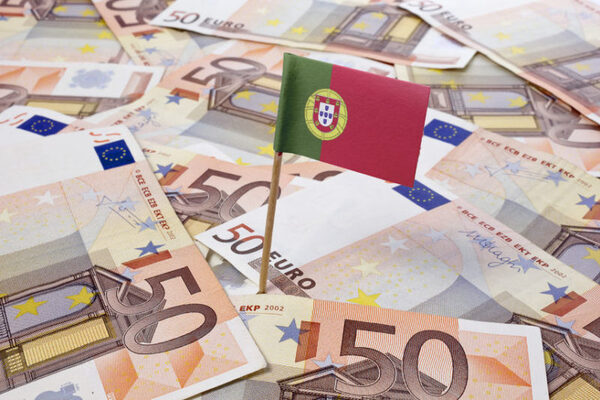
When you visit Portugal, you'll encounter a range of euro banknotes and coins. Banknotes are uniform across all eurozone countries and include denominations of €5, €10, €20, €50, €100, €200, and €500. However, €200 and €500 notes are rarely used in everyday transactions, and many small shops may not accept them.
Euro coins come in 1, 2, 5, 10, 20, and 50 cent pieces, as well as €1 and €2 coins. All euro coins and notes are valid throughout the eurozone, so you may see coins minted in other countries while in Portugal.
Tip: For daily purchases, carry smaller denominations, as large notes can be hard to break in local shops or markets.
3. History: From Escudo to Euro
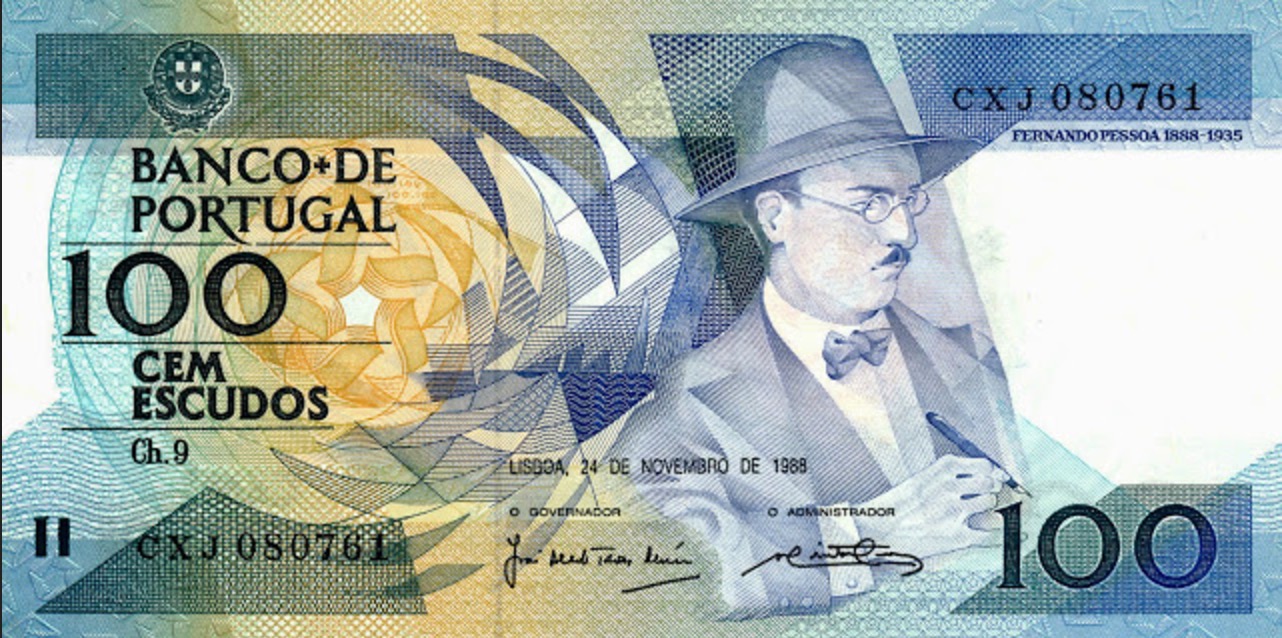
Before the euro, Portugal's currency was the escudo. The switch to the euro began in 1999, with the escudo phased out entirely by February 2002. Portugal's early adoption of the euro was part of a broader European effort to create a single, stable currency, making travel and trade easier across the continent.
The euro is now the second-most traded currency in the world, providing Portugal with access to a large, stable market and removing the risks of fluctuating exchange rates within the eurozone.
4. Currency Exchange and Spending in Portugal
If you're travelling to Portugal, you'll need euros for all purchases. Foreign currencies like the US dollar, British pound, or Malaysian ringgit are not accepted in shops or restaurants. It's best to exchange your money before you arrive or use a travel money card that supports euros.
5. Currency Tips for Traders
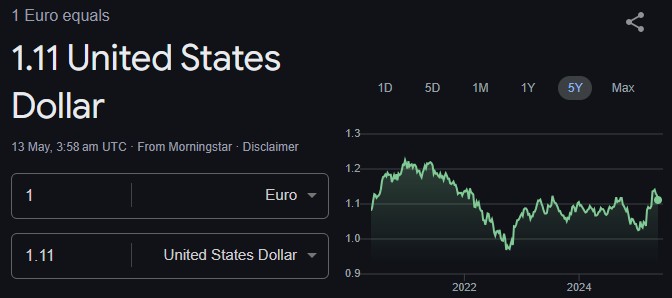
Exchange rates: The EUR/USD and EUR/GBP are among the most traded currency pairs globally, so rates can fluctuate based on economic news, central bank decisions, and global events.
Decimal notation: In Portugal, a comma is used for decimals (e.g., €1,50 instead of €1.50), and a dot for thousands (e.g., €10.000 for ten thousand euros).
No dual pricing: Portugal only accepts euros, so always check prices and receipts carefully.
Banking: The Bank of Portugal issues and oversees the euro in Portugal.
For traders: The euro's value against other currencies can be affected by European Central Bank policy, economic data from the eurozone, and global financial trends. Portugal's use of the euro means its currency is directly linked to these broader movements.
Portugal uses the euro (EUR, €) as its sole official currency, with a straightforward system of coins and banknotes familiar across the eurozone. Whether you're a trader, or business owner, understanding how the euro works in Portugal will help you navigate payments, exchanges, and market trends with confidence.
Disclaimer: This material is for general information purposes only and is not intended as (and should not be considered to be) financial, investment or other advice on which reliance should be placed. No opinion given in the material constitutes a recommendation by EBC or the author that any particular investment, security, transaction or investment strategy is suitable for any specific person.
EBC Financial Group is a co-brand shared by a group of entities
including:
EBC Financial Group (SVG) LLC is authorized by the St.Vincent and the
Grenadines Financial Services Authority(SVGFSA),and the company
registration number is 353 LLC 2020, with registered address at Euro
House, Richmond Hill Road, Kingstown, VC0100, St. Vincent and the
Grenadines.
Other Relevant Entities
EBC Financial Group (UK) Limited is authorised and regulated by the
Financial Conduct Authority. Reference Number: 927552. Website: www.ebcfin.co.uk
EBC Financial Group (Cayman) Limited is licensed and regulated by the
Cayman Islands Monetary Authority (Number: 2038223). Website:
www.ebcgroup.ky
EBC Financial (MU) Limited is licensed and regulated by the the
Financial Services Commission, Mauritius (License Number GB24203273)
with registrated address at 3rd Floor, Standard Chartered Tower,
Cybercity, Ebene, 72201, Republic of Mauritius. Website for this entity
is maintained separately.
EBC Financial Group (Comoros) Limited is authorised by The Autonomous
Island of Anjouan, Union of Comoros Offshore Finance Authority with
License number L 15637/EFGC, with registered office address at Hamchako,
Mutsamudu, Autonomous Island of Anjouan, Union of Comoros.
EBC Financial Group (Australia) Pty Ltd (ACN: 619 073 237) is authorised
and regulated by the Australian Securities and Investments Commission
(Number: 500991). EBC Financial Group (Australia) Pty Ltd is a related
entity of EBC Financial Group (SVG) LLC. The two entities are managed
separately. The financial products and services offered on this website
are NOT provided by the Australian entity and no recourse against the
Australian entity is available.
EBC Group (Cyprus) Ltd, faciliates payment services to the licensed and
regulated entities within the EBC Financial Group strucutre, registered
under the Companies Law of Republic of Cyprus with the number HE 449205,
registered office address at 101 Gladstonos, Agathangelou Business
Centre, 3032 Limassol, Cyprus.
Business Address: The Leadenhall Building, 122 Leadenhall Street, London, United Kingdom, EC3V 4AB. Email Address :cs@ebc.com . Telephone : +44 20 3376 9662
Regional Restrictions:
EBC does not offer any services to citizens and residents of certain
jurisdictions including: Afghanistan, Belarus, Burma (Myanmar), Canada,
Central African Republic, Congo, Cuba, Democratic Republic of the Congo,
Eritrea, Haiti, Iran, Iraq, Lebanon, Libya, Malaysia, Mali, North Korea
(Democratic People's Republic of Korea), Russia, Somalia, Sudan, South
Sudan, Syria, Ukraine (including Crimea, Donetsk, and Luhansk Regions),
the United States, Venezuela, and Yemen.
Any Spanish on this website is for LATAM only and is not designated for
anyone in European Union or Spain For more information, please check out
our FAQs.
Any Portuguese on this website is for Africa only, and is not designated
for anyone in European Union or Portugal or Brazil. For more
information, please check out our FAQs.
Compliance Disclosure:The website can be accessed globally and is not specific to any entity. Your actual rights and obligations will be determined based on the entity and jurisdiction that you choose to be regulated.There may be local laws and regulations which prohibit or limit your rights to access, download, distribute, disseminate, share or otherwise use any or all of the documents and information published on this website.
Risk Warning: Trading Contracts for Difference (CFDs) are complex financial instruments and come with a high risk of losing money rapidly due to leverage. Trade on margin carries a high level of risk and may not be suitable for all investors. Before deciding to trade Forex and CFDs, you should carefully consider your trading objectives, level of experience and risk appetite. The possibility exists that you could sustain a loss of some or all of your initial trading capital. We recommend that you seek independent advice and ensure you fully understand the risks involved before making any investment decision. Please read the relevant risk disclosure statements carefully before trading.