Published on: 2025-10-09
Spread behaves differently in forex versus stocks because the markets are structured differently, trade at different times, and quote in different ways.
In practice, forex spreads on major pairs are often tighter and more continuous, while stock spreads vary by venue, tick size, auction periods, and order flow.
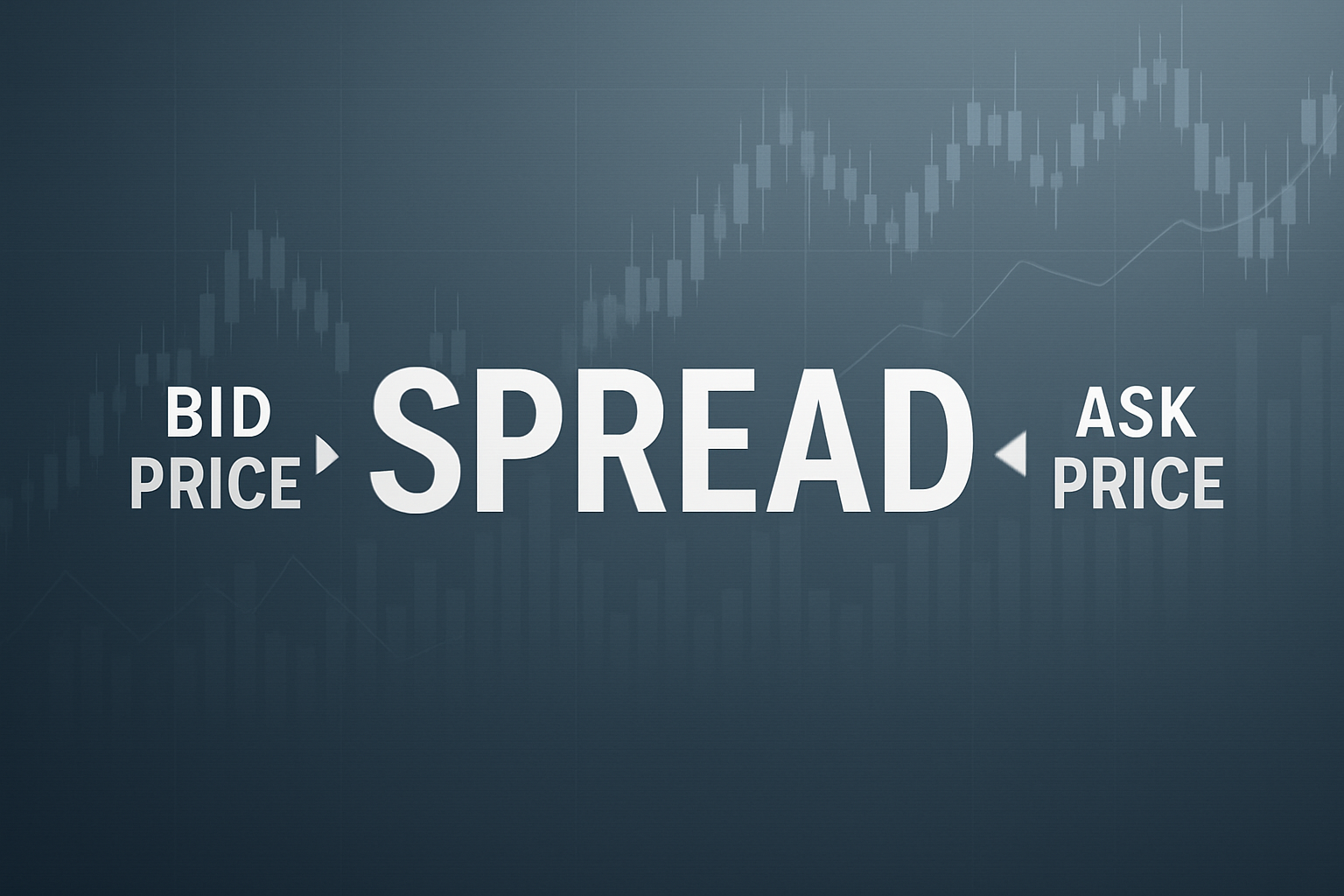
Spread is the gap between the best available buy price and the best available sell price at a given moment.
In forex, spread is quoted continuously by liquidity providers in a decentralised market, so major pairs often show tight, round-the-clock pricing that varies by session.
In stocks, spread forms on exchanges and alternative venues are constrained by tick size and auctions, and often widen at the open, then narrow as depth builds.
So, spread does behave differently in forex versus stocks because of market design, quoting rules, and trading hours.
Spread is paid whenever an order crosses the market, so it affects break-even levels, trade frequency, and strategy edge.
Wider spreads reduce fill quality, increase slippage risk, and can make small targets unprofitable.
Knowing when and where spread changes help with order type, size, and timing decisions.
Forex:
EUR/USD shows 1.1050 bid and 1.1052 ask. The spread is 0.0002. On a standard $100,000 trade, that is about $20 of cost before any fees.
Stock:
A $50.00 share quotes $49.99 bid and $50.03 ask. The spread is $0.04. Buying 500 shares costs about $20 in spread. At the open, the spread might widen to $0.10 or more.
Later, when depth improves, it can tighten to $0.01 or $0.02.
Trading hours: forex trades nearly 24 hours with the tightest spreads during London and New York overlap; stocks cluster liquidity around the open and close.
Market structure: forex is dealer and provider driven; stocks match on exchanges and dark venues with different fee and rebate models.
Tick size: stocks quote in fixed increments that can hold spreads wider in thin names; forex quotes to fractional pips for finer pricing.
Venue or provider choice: stock routing and maker-taker fees affect spread and fill; forex providers differ by pair, session, and quote stability.
Order size and depth: the same displayed spread can hide very different depth profiles, which changes realised cost on larger orders.
Note the best bid, best ask, and the mid price, then track the spread in cents or pips.
Check time of day and session overlap; avoid thin patches where spreads flare.
Compare the displayed spread to the visible depth on the top two levels.
Record realised spread paid versus mid on each fill and review weekly.
Trade when liquidity is best: for forex, favour major sessions; for stocks, avoid the first minutes after the open unless there is a plan.
Use limit or marketable-limit orders to control the worst price crossed.
Fit order size to visible depth and recent trade size; slice larger orders.
Prefer venues or providers with stable quotes and consistent price improvement.
Stand aside around scheduled news if spreads are already widening.
| Condition | Strong, Cheaper Spread | Weak, Costlier Spread |
|---|---|---|
| Time of day | Liquid overlap, midday consolidation | Open auction, pre-news, late illiquid |
| Depth | Thick top two levels | Thin book, sporadic prints |
| Volatility | Calm tape, orderly flow | Sudden moves, gaps, halts |
| Market design | Major forex pairs, active large-caps | Exotic forex, small-caps, new listings |
| Mistake | Impact | Fix |
|---|---|---|
| Treating spread as fixed | Surprise costs | Recheck the spread by session and into the news |
| Chasing with market orders | Overpaying | Use marketable limits with a firm cap |
| Ignoring depth | Hidden slippage | Match slice size to top-of-book and recent volume |
| Assuming tight spread means cheap | Thin book risk | Test fills, monitor realised spread versus mid |
| Comparing forex and stocks one-to-one | Wrong expectations | Adjust for tick size, auctions, and routing |
Professionals budget spread explicitly, measure fills against mid price, and target a participation rate that limits market impact.
In stocks, they use opening or closing auctions, midpoint pegs, and smart routing to seek improvement.
In forex, they compare providers across pairs and sessions, favour stable quote streams, and cut size or wait when spreads flare.
They audit realised spread and slippage by time of day and venue, then retire tactics that cannot beat their recorded costs.
Bid: the highest price a buyer is willing to pay at the moment.
Ask: the lowest price a seller is willing to accept at the moment.
Liquidity: the ability to trade size quickly near the current price.
Slippage: the difference between the expected price and the actual fill.
Spread behaves differently in forex versus stocks due to market structure, trading hours, tick size, and venue design.
Monitor spread by session and depth, use price-controlled orders, and track realised costs to keep hidden fees in check.