Published on: 2025-08-29
Updated on: 2025-09-02
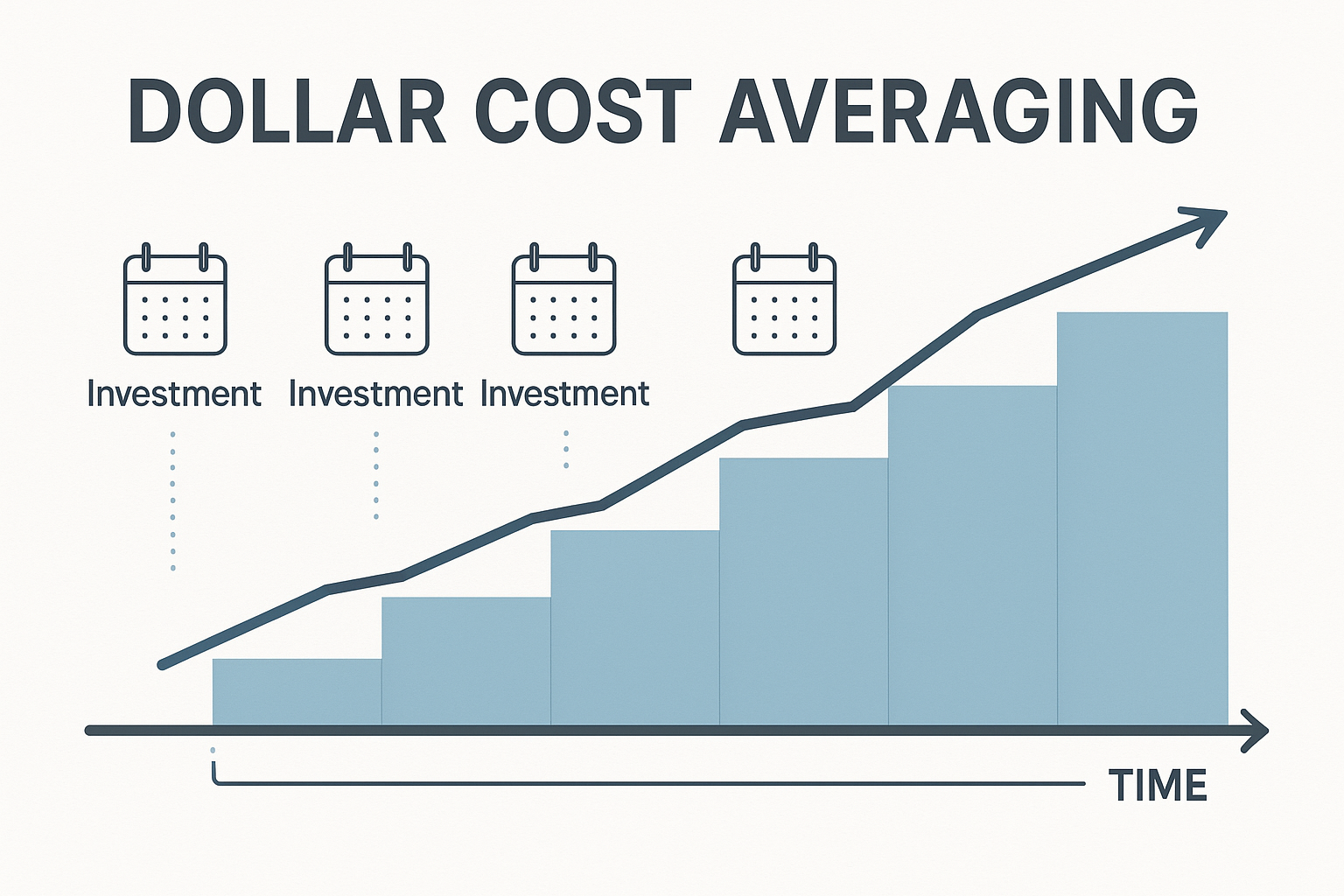
Dollar Cost Averaging (DCA) means investing the same dollar amount at regular intervals—weekly, monthly, or quarterly—regardless of the current price.
This naturally buys more units when prices are low and fewer when they're high, which can reduce the average cost per share and help maintain consistency.
DCA reduces market‑timing pressure—difficult even for professionals—and replaces one large decision with a repeatable process that's easier to stick with.
It helps investors keep investing through volatility, lowering regret from buying too soon or too late while supporting long‑term compounding.
Behaviourally, DCA cuts the emotional swings that lead to chasing rallies or panic‑selling, making the plan easier to follow in real time.
Portfolio‑wise, smoothing entry points can stabilise the average cost and keep investors invested when recoveries begin, which is often where large early gains occur.
Assume investing $100 on the first of each month for five months as prices move from $5, $5, $2, $4, to $5 per share. Purchases are 20, 20, 50, 25, and 20 shares—135 shares for $500 total.
The average cost per share is approximately $3.70, lower than most months because more shares were bought during the $2 dip.
DCA increases the share count during dips and trims it during peaks, averaging the entry price over time.
Automation via broker or pension contributions makes consistency easier and reduces the urge to “wait for the perfect price.”
| Situation | Why DCA Helps | Why DCA Hurts | What To Consider |
|---|---|---|---|
| High Volatility | Smooths entry price when swings are large. | — | Use automation to avoid emotional timing. |
| New/Nervous Investor | Reduces decision stress and regret. | — | Keep the amount realistic and stick to the schedule. |
| Building A Long-Term Position | Spreads entries, keeps capital flowing. | — | Works well with diversified funds/ETFs. |
| Uncertain Fair Value | Stages entry while thesis develops. | — | Combine with periodic research reviews. |
| Strong, Persistent Uptrend | — | Staged buys may underperform lump-sum. | If confident in trend and time horizon, consider lump-sum. |
| High Fees Or Tiny Ticket Sizes | — | Costs can erode the benefit of frequent buys. | Minimise fees; choose monthly over weekly if needed. |
| Short Window Before A Catalyst | — | Too much cash may sit idle before the move. | Weigh the event's timing and conviction level. |
| Averaging Down A Failing Thesis | — | DCA can mask a broken idea if misapplied. | DCA is a schedule, not a signal to add to losers — re-check the thesis first. |
Pick the asset(s) and account (e.g., a broad index fund/ETF in a brokerage or pension wrapper).
Choose a fixed dollar amount and frequency (monthly often balances costs and behaviour).
Automate deposits and orders to ensure consistency.
Keep costs low with low‑fee funds and platforms to protect small, repeated buys.
Review once or twice a year to confirm allocation and contribution level; avoid tinkering monthly.
Platform commissions and FX fees can compound with frequent purchases—prioritise low‑cost routes.
Fund expenses (OCF/TER) matter over the long run—prefer lower‑fee index funds/ETFs.
Record‑keeping: multiple purchase lots require good tracking for capital gains when selling.
Cash drag: staged entries can lag lump‑sum in rising markets because cash remains idle between buys.
Believing DCA Guarantees Profit
DCA manages timing risk and behaviour; it doesn't remove market risk. Prices can fall after several buys. Keep a long‑term horizon and diversified exposure.
Confusing DCA With Averaging Down
DCA invests a fixed amount on schedule, regardless of price. Averaging down increases position size after declines on a single idea. If the thesis is broken, stop and reassess rather than “DCA‑ing” into a loser.
Over‑Trading With High Fees
Small, frequent orders with per‑trade fees can negate DCA's benefits. Use zero/low‑commission platforms, accumulate cash for monthly tranches, or use auto‑invest plans with bundled costs.
Abandoning The Plan After Headlines
DCA works through cycles. Pausing after drops locks in higher average costs and misses the benefit of buying lower. If the asset choice is still valid, stick to the schedule.
Ignoring Position Sizing And Risk
DCA is an entry method, not an all‑clear to keep buying without limits. Set a maximum allocation, manage overall portfolio risk, and avoid concentration in single securities.
Using DCA On Poor Assets
DCA doesn't fix a weak investment case. Apply it primarily to diversified vehicles or high‑conviction ideas vetted by research; review fundamentals regularly.
Lump‑Sum Investing: Investing all funds at once; can outperform DCA in persistent uptrends but carries higher timing risk.
DRIP (Dividend Reinvestment Plan): Automatically reinvests dividends into more shares; often pairs well with DCA.
Rebalancing/Constant‑Dollar Approach: Periodic adjustments to target allocations; related but distinct from fixed‑contribution DCA.
Pound‑Cost Averaging: UK term for the same DCA concept.
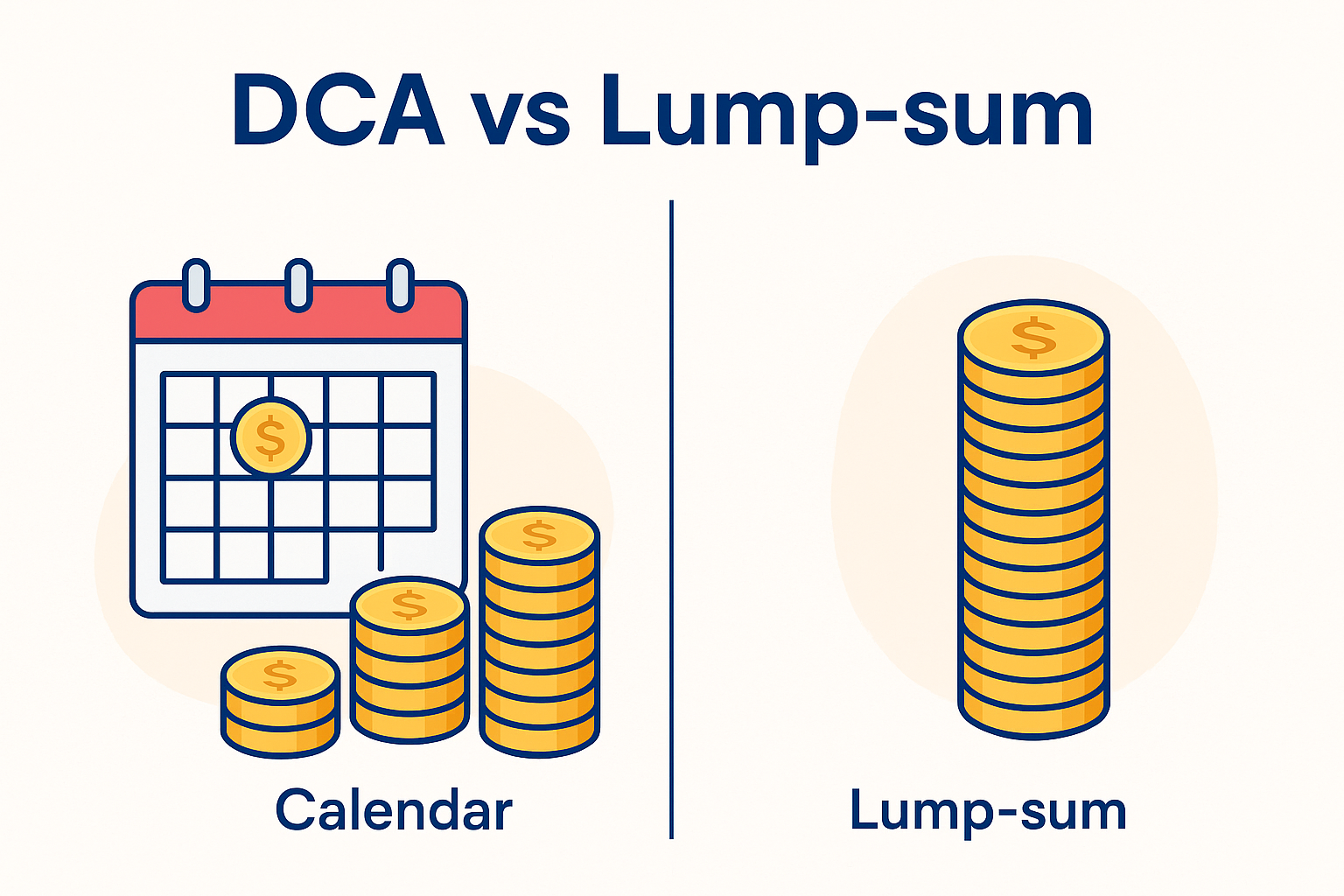
Treat DCA as a behaviour and implementation tool that reduces regret and supports adherence, rather than a return‑maximising edge. In net‑rising markets, lump‑sum often leads, but DCA shines by managing entry risk and keeping investors on plan.
If adding sophistication, codify rule‑based overlays—such as modestly increasing the scheduled buy after predefined drawdowns—while avoiding discretionary “gut feel” overrides. Always document triggers, limits, and review intervals.
DCA is a simple, disciplined way to invest without guessing the “right” moment. By automating fixed purchases, it smooths entry prices, reduces stress, and supports long‑term habits—especially useful in volatile markets. Balance it against costs, taxes, and the risk of underperformance in strong uptrends, and apply it to well‑researched, diversified holdings for the best odds of success.


World's Best Broker