Published on: 2025-11-21
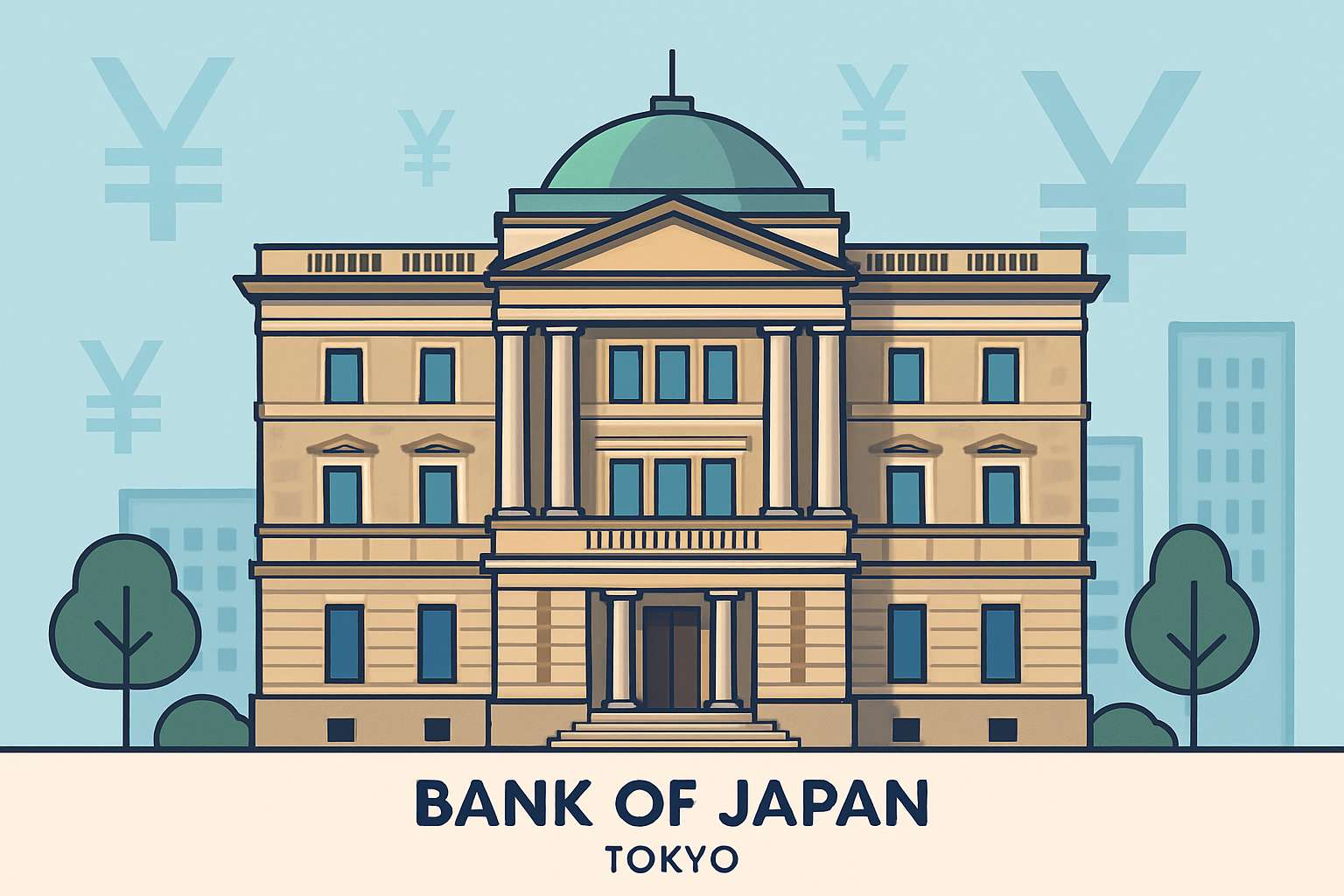
The Bank of Japan or “BoJ” is Japan's central bank and the core institution of Japan’s financial system.
Instead of serving retail customers or allocating government budgets, the BoJ operates as an independent public authority entrusted with managing monetary conditions, directing liquidity flows, and safeguarding the resilience of the Japanese financial system.
For traders, the BoJ is a core reference point in understanding yen dynamics, bond market behavior, and macro-policy signals that ripple across global markets.
At its essence, the BoJ manages three critical forces in Japan’s economy: money supply, credit, and public confidence.
Money supply refers to the circulation of yen in the economy, credit reflects the ability of businesses and households to borrow and invest, and confidence represents trust in the stability and reliability of Japan’s financial system.
By balancing these elements, the BoJ helps sustain economic growth and prevents financial instability.
The BoJ’s institutional framework balances independence with structured oversight:
Made up of the Governor, two Deputy Governors, and six appointed members, the Policy Board designs and approves interest-rate moves, monetary policy programs, and operational strategy.
Its decisions directly influence yen valuation, government bond yields, and overall market sentiment.
The main headquarters is located in Tokyo’s Nihonbashi district, supported by regional branches that interact with local banks and implement daily policy operations across Japan’s financial ecosystem.
Specialized units handle currency issuance, settlement infrastructure, reserve management, and open-market operations. These divisions ensure payment systems remain stable and that liquidity reaches the sectors where it is needed most.
The BoJ influences the cost and availability of credit by setting key interest rates and conducting market operations. It aims to achieve price stability, promote economic growth, and maintain employment.
The BoJ issues Japanese yen notes and coins, ensuring a stable money supply that supports trade and daily transactions.
It monitors banks and other financial institutions, intervening when necessary to prevent systemic risk or market disruptions.
During financial crises, the BoJ provides liquidity to banks to prevent collapse, safeguarding confidence in the financial system.
The BoJ manages government bond purchases, foreign exchange interventions, and quantitative easing programs to guide the economy and financial markets.
The BoJ’s policies affect interest rates, loan availability, inflation, and investment returns in Japan. Businesses, investors, and consumers all respond to its guidance, making the central bank a vital driver of economic activity.
While it does not handle taxation or government spending, its management of credit, money, and liquidity strongly shapes Japan’s economic environment.
The Bank of Japan oversees monetary policy, manages interest rates, directs liquidity in financial markets, and issues the Japanese yen. Its decisions shape borrowing costs, inflation trends, and the overall stability of Japan’s financial system.
Changes in BoJ policy often influence the value of the yen currency. When the bank adjusts interest rates or expands monetary stimulus, traders may see shifts in yen volatility, carry-trade activity, and demand for Japanese government bonds.
BoJ guidance and policy announcements provide signals about future economic conditions, rate expectations, and market liquidity. These cues help traders, analysts, and businesses make informed decisions on positioning, risk management, and long-term investment strategies.
In simple terms, the Bank of Japan is the institution that keeps Japan’s economy stable, money flowing, and financial systems secure.
Understanding its role helps traders and businesses navigate interest rates, investment decisions, and the overall economic landscape in one of the world’s largest economies.
Disclaimer: This material is for general information purposes only and is not intended as (and should not be considered to be) financial, investment or other advice on which reliance should be placed. No opinion given in the material constitutes a recommendation by EBC or the author that any particular investment, security, transaction or investment strategy is suitable for any specific person.