Published on: 2025-11-03
Updated on: 2025-11-05
In every market, the ask price defines the true cost of entry. Learn how it works, why it changes, and what it means for your trades.
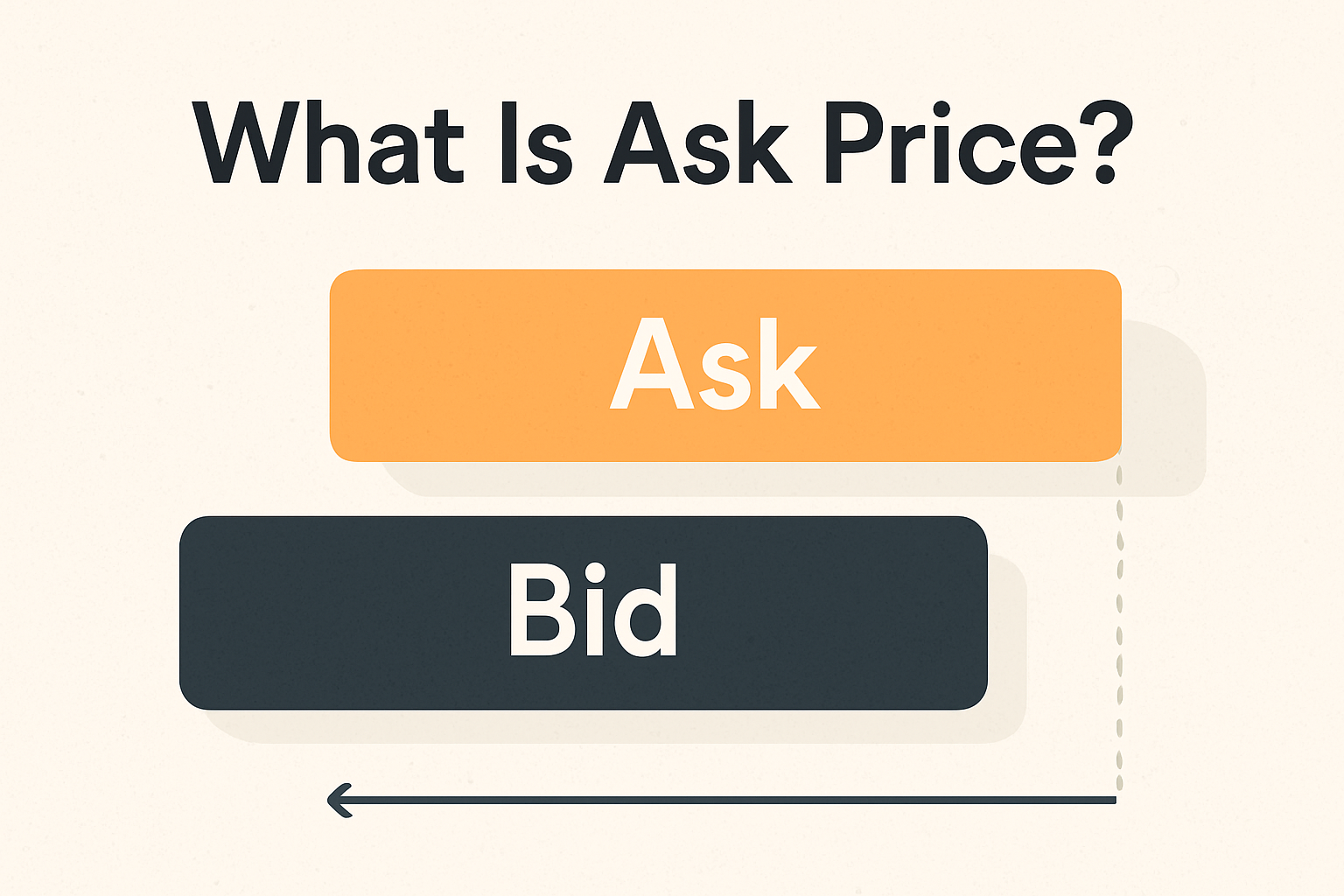
The ask price, also known as the offer price, is the lowest price a seller is willing to accept for a financial asset. It matters because it defines the “selling side” of every trade, directly affecting how traders buy securities or currencies in the market.
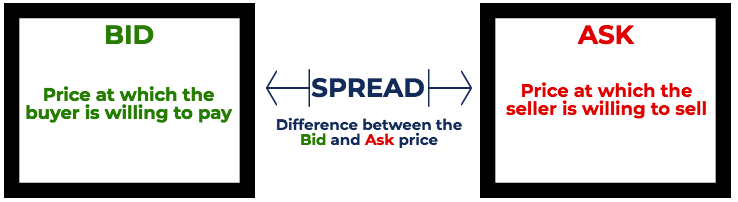
Ask price (the seller’s price) is the quoted price at which a market participant or broker offers to sell an asset. It appears alongside the bid price (the buyer’s offer) in every trading platform.
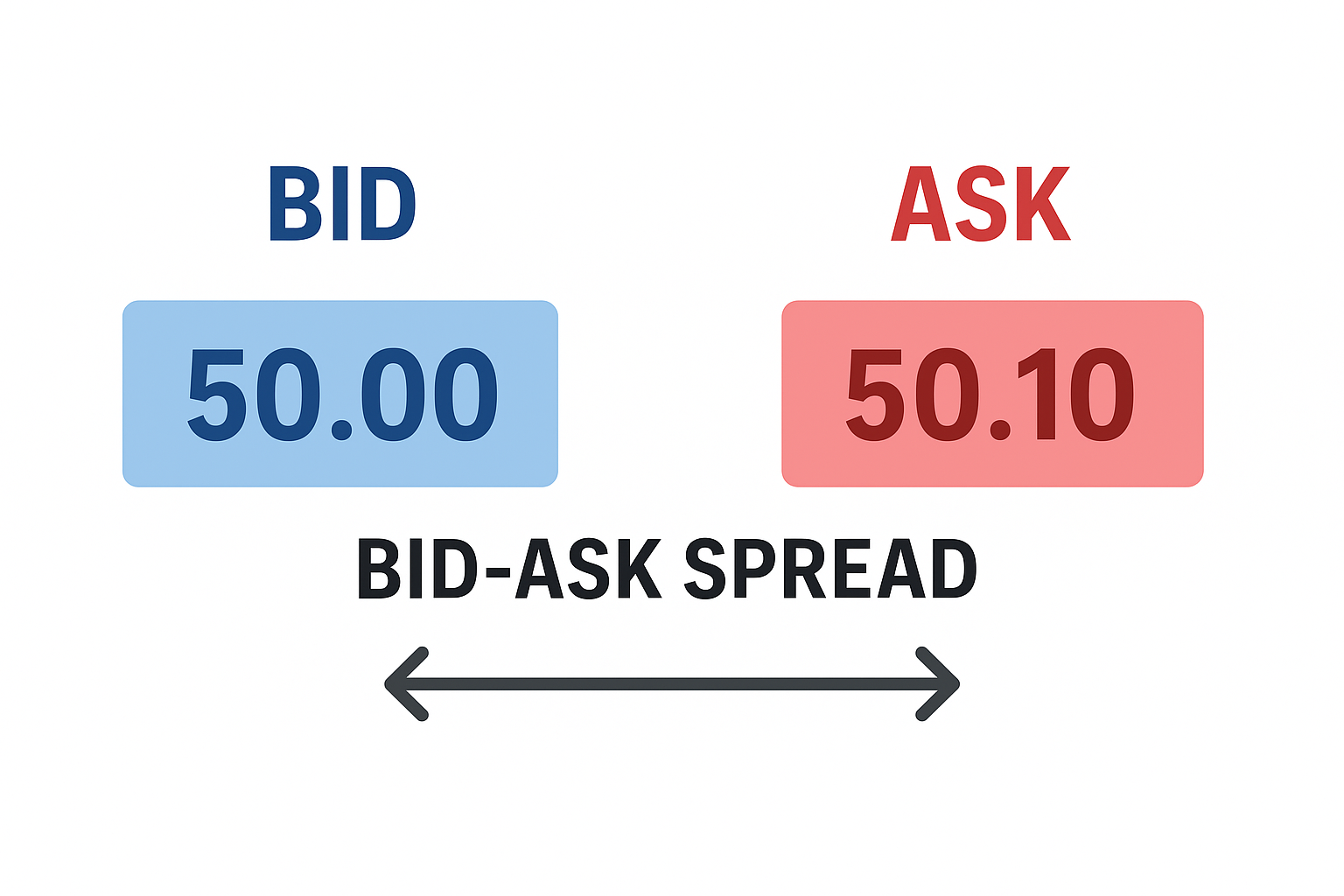
In practice, the ask is always higher than the bid, and the difference forms the spread.
The ask price represents the lowest price at which a seller is willing to sell an asset. It’s essentially the seller’s “offer” to the market, the amount they hope to receive when a buyer agrees to purchase.
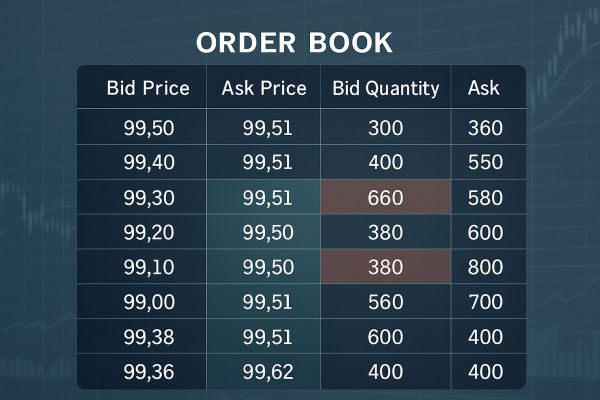
Sellers, brokers, or market makers list their offers in the market’s order book. The lowest available offer becomes the current ask price that buyers see. In simple terms, the ask is what you and everyone else are asking to sell which is the minimum you’re willing to accept.
For example, if you list a stock for $100, that becomes your ask price, and you’ll receive $100 when it sells.
The ask price moves constantly as sellers adjust their offers in response to demand, order flow, and market sentiment.
During periods of volatility or breaking news, sellers may raise or lower their asks to reflect perceived risk or opportunity.
In highly liquid markets such as large-cap stocks or major currency pairs, the ask price typically stays close to the bid due to heavy trading activity. In thin or uncertain markets, the gap widens, increasing costs for traders seeking immediate execution.
As of 3 November 2025, Tesla Inc. (TSLA) is quoted on the NASDAQ at $220.00 / $220.05 (bid / ask).
$220.00 is the bid price which is the price where buyers are currently willing to buy. The second number, $220.05, is the ask price which is the lowest price sellers are currently willing to accept for one share of Tesla.
If an investor decides to buy Tesla shares immediately using a market order, the trade will execute at $220.05, because that is the price set by the sellers.
This ask price represents the minimum amount a seller is ready to receive and the immediate cost a buyer must pay to enter the trade.
The small difference between the bid ($220.00) and the ask ($220.05) which is known as the bid-ask spread reflects the transaction cost built into every trade and compensates liquidity providers such as market makers for facilitating quick execution.
Bid Price: The highest price a buyer is willing to pay for an asset.
Bid-Ask Spread: The difference between bid and ask; a measure of liquidity and transaction cost.
Market Order: A trade executed immediately at the best available ask (for buyers) or bid (for sellers).
Because sellers aim to receive slightly more than buyers want to pay. The gap compensates for transaction costs and market risk.
Yes. It fluctuates constantly with market activity, news, and order volume, especially in volatile or thinly traded markets.
When you buy at market price, you pay the current ask. A wider spread means a higher entry cost, while a tight spread reduces slippage.
The ask price shows the lowest price a seller is willing to accept for an asset. It defines the cost for buyers who want to purchase immediately and moves constantly with market demand and liquidity.
Understanding the ask price helps traders manage entry costs and navigate market spreads more effectively.
Disclaimer: This material is for general information purposes only and is not intended as (and should not be considered to be) financial, investment or other advice on which reliance should be placed. No opinion given in the material constitutes a recommendation by EBC or the author that any particular investment, security, transaction or investment strategy is suitable for any specific person.


World's Best Broker











EBC Financial Group is a co-brand shared by a group of entities
including:
EBC Financial Group (SVG) LLC is authorized by the St.Vincent and the
Grenadines Financial Services Authority(SVGFSA),and the company
registration number is 353 LLC 2020, with registered address at Euro
House, Richmond Hill Road, Kingstown, VC0100, St. Vincent and the
Grenadines.
Other Relevant Entities
EBC Financial Group (UK) Limited is authorised and regulated by the
Financial Conduct Authority. Reference Number: 927552. Website: www.ebcfin.co.uk
EBC Financial Group (Cayman) Limited is licensed and regulated by the
Cayman Islands Monetary Authority (Number: 2038223). Website:
www.ebcgroup.ky
EBC Financial (MU) Limited is licensed and regulated by the the
Financial Services Commission, Mauritius (License Number GB24203273)
with registrated address at 3rd Floor, Standard Chartered Tower,
Cybercity, Ebene, 72201, Republic of Mauritius. Website for this entity
is maintained separately.
EBC Financial Group (Comoros) Limited is authorised by The Autonomous
Island of Anjouan, Union of Comoros Offshore Finance Authority with
License number L 15637/EFGC, with registered office address at Hamchako,
Mutsamudu, Autonomous Island of Anjouan, Union of Comoros.
EBC Financial Group (Australia) Pty Ltd (ACN: 619 073 237) is authorised
and regulated by the Australian Securities and Investments Commission
(Number: 500991). EBC Financial Group (Australia) Pty Ltd is a related
entity of EBC Financial Group (SVG) LLC. The two entities are managed
separately. The financial products and services offered on this website
are NOT provided by the Australian entity and no recourse against the
Australian entity is available.
EBC Group (Cyprus) Ltd, faciliates payment services to the licensed and
regulated entities within the EBC Financial Group strucutre, registered
under the Companies Law of Republic of Cyprus with the number HE 449205,
registered office address at 101 Gladstonos, Agathangelou Business
Centre, 3032 Limassol, Cyprus.
Business Address: The Leadenhall Building, 122 Leadenhall Street, London, United Kingdom, EC3V 4AB. Email Address :cs@ebc.com . Telephone : +44 20 3376 9662
Regional Restrictions:
EBC does not offer any services to citizens and residents of certain
jurisdictions including: Afghanistan, Belarus, Burma (Myanmar), Canada,
Central African Republic, Congo, Cuba, Democratic Republic of the Congo,
Eritrea, Haiti, Iran, Iraq, Lebanon, Libya, Malaysia, Mali, North Korea
(Democratic People's Republic of Korea), Russia, Somalia, Sudan, South
Sudan, Syria, Ukraine (including Crimea, Donetsk, and Luhansk Regions),
the United States, Venezuela, and Yemen.
Any Spanish on this website is for LATAM only and is not designated for
anyone in European Union or Spain For more information, please check out
our FAQs.
Any Portuguese on this website is for Africa only, and is not designated
for anyone in European Union or Portugal or Brazil. For more
information, please check out our FAQs.
Compliance Disclosure:The website can be accessed globally and is not specific to any entity. Your actual rights and obligations will be determined based on the entity and jurisdiction that you choose to be regulated.There may be local laws and regulations which prohibit or limit your rights to access, download, distribute, disseminate, share or otherwise use any or all of the documents and information published on this website.
Risk Warning: Trading Contracts for Difference (CFDs) are complex financial instruments and come with a high risk of losing money rapidly due to leverage. Trade on margin carries a high level of risk and may not be suitable for all investors. Before deciding to trade Forex and CFDs, you should carefully consider your trading objectives, level of experience and risk appetite. The possibility exists that you could sustain a loss of some or all of your initial trading capital. We recommend that you seek independent advice and ensure you fully understand the risks involved before making any investment decision. Please read the relevant risk disclosure statements carefully before trading.