Published on: 2023-08-10
Updated on: 2024-03-29
The Keynesian theory of money demand is one of the most significant developments in the theory of the monetary economy. It is an important component of the well-known Keynesian Revolution and holds a very important position in the history of economic development. It forms the economic basis for discussions on numerous monetary and economic topics and is also one of the theoretical foundations for analyzing and evaluating macroeconomic policy performance. However, Keynesian money demand theory is not limited to perfection. With the further development of modern economic theory and the increasing emphasis on microfoundations, Keynesian money demand theory has also shown several shortcomings. Therefore, from the perspective of the diversified development of modern economics, we need to recognize the development and limitations of Keynesian money demand theory. This has significant implications for promoting theoretical research on currency demand issues and correctly understanding the role of monetary policy.
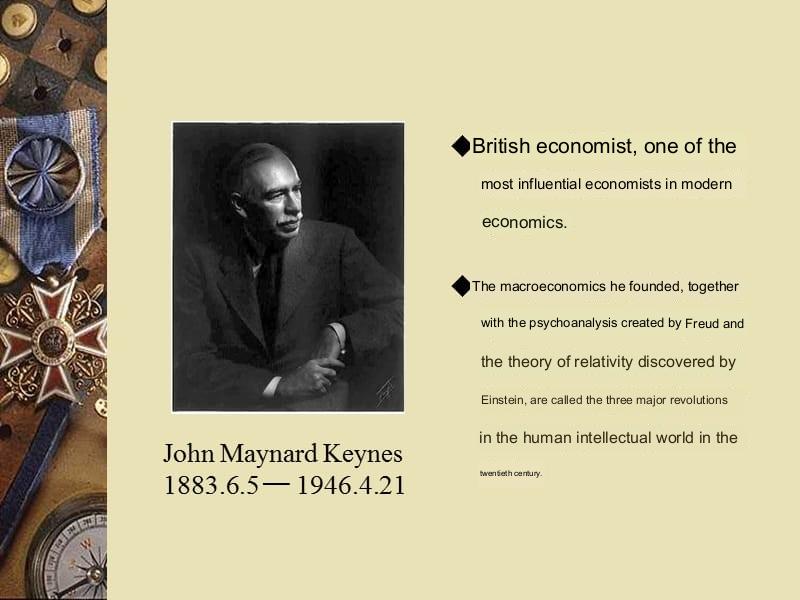
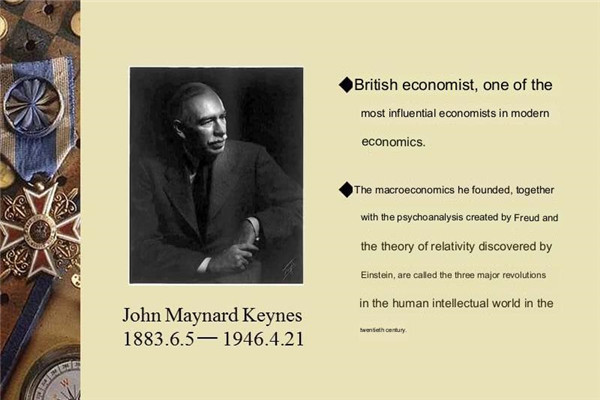
Keynesian money demand theory is a theoretical framework proposed by economist John Maynard Keynes to explain money demand. Keynesian money demand theory plays an important role in Keynesian economics, explaining the demand for money and the impact of the money supply on economic activities.
According to Keynes, currency is not only a medium for exchanging goods and services but also has the characteristic of being an asset. Keynes divided the demand for money into three main motivations: trading motivation, prevention motivation, and investment motivation.
Firstly, transaction motivation refers to individuals and businesses holding currency for daily transactions and payment needs. Keynes believed that the demand for money was closely related to economic activity and trading volume. As the trading volume increases, the demand for currency will also increase.
Secondly, preventive motivation refers to individuals and businesses holding currency in response to uncertainty and risk. Keynes believed that holding currency could provide a safe reserve to deal with emergencies or unexpected events. Therefore, the monetary demand for preventive motives is related to the degree of uncertainty in the economy.
Finally, speculative motivation refers to individuals and businesses adjusting their currency holdings based on their expectations of changes in currency value. Keynes believed that speculative behavior could lead to an imbalance between money supply and demand, leading to inflation or deflation.
The Keynesian theory of money demand emphasizes the impact of money supply on economic activity and inflation. According to Keynes' view, an increase in the money supply will stimulate economic activity and investment, but if the money supply grows too fast, it may lead to inflation. Therefore, Keynes suggested that the government and central bank stabilize the economy and control inflation by adjusting the money supply.
Although Keynesian money demand theory has been criticized to some extent, it provides an important framework for understanding the role and impact of money in the economy. This theory has guiding significance for macroeconomic and monetary policy formulation and provides a theoretical basis for achieving economic stability and growth.
Disclaimer: Investment involves risk. The content of this article is not an investment advice and does not constitute any offer or solicitation to offer or recommendation of any investment product.

World's Best Broker
EBC Financial Group is a co-brand shared by a group of entities
including:
EBC Financial Group (SVG) LLC is authorized by the St.Vincent and the
Grenadines Financial Services Authority(SVGFSA),and the company
registration number is 353 LLC 2020, with registered address at Euro
House, Richmond Hill Road, Kingstown, VC0100, St. Vincent and the
Grenadines.
Other Relevant Entities
EBC Financial Group (UK) Limited is authorised and regulated by the
Financial Conduct Authority. Reference Number: 927552. Website: www.ebcfin.co.uk
EBC Financial Group (Cayman) Limited is licensed and regulated by the
Cayman Islands Monetary Authority (Number: 2038223). Website:
www.ebcgroup.ky
EBC Financial (MU) Limited is licensed and regulated by the the
Financial Services Commission, Mauritius (License Number GB24203273)
with registrated address at 3rd Floor, Standard Chartered Tower,
Cybercity, Ebene, 72201, Republic of Mauritius. Website for this entity
is maintained separately.
EBC Financial Group (Comoros) Limited is authorised by The Autonomous
Island of Anjouan, Union of Comoros Offshore Finance Authority with
License number L 15637/EFGC, with registered office address at Hamchako,
Mutsamudu, Autonomous Island of Anjouan, Union of Comoros.
EBC Financial Group (Australia) Pty Ltd (ACN: 619 073 237) is authorised
and regulated by the Australian Securities and Investments Commission
(Number: 500991). EBC Financial Group (Australia) Pty Ltd is a related
entity of EBC Financial Group (SVG) LLC. The two entities are managed
separately. The financial products and services offered on this website
are NOT provided by the Australian entity and no recourse against the
Australian entity is available.
EBC Group (Cyprus) Ltd, faciliates payment services to the licensed and
regulated entities within the EBC Financial Group strucutre, registered
under the Companies Law of Republic of Cyprus with the number HE 449205,
registered office address at 101 Gladstonos, Agathangelou Business
Centre, 3032 Limassol, Cyprus.
Business Address: The Leadenhall Building, 122 Leadenhall Street, London, United Kingdom, EC3V 4AB. Email Address :cs@ebc.com . Telephone : +44 20 3376 9662
Regional Restrictions:
EBC does not offer any services to citizens and residents of certain
jurisdictions including: Afghanistan, Belarus, Burma (Myanmar), Canada,
Central African Republic, Congo, Cuba, Democratic Republic of the Congo,
Eritrea, Haiti, Iran, Iraq, Lebanon, Libya, Malaysia, Mali, North Korea
(Democratic People's Republic of Korea), Russia, Somalia, Sudan, South
Sudan, Syria, Ukraine (including Crimea, Donetsk, and Luhansk Regions),
the United States, Venezuela, and Yemen.
Any Spanish on this website is for LATAM only and is not designated for
anyone in European Union or Spain For more information, please check out
our FAQs.
Any Portuguese on this website is for Africa only, and is not designated
for anyone in European Union or Portugal or Brazil. For more
information, please check out our FAQs.
Compliance Disclosure:The website can be accessed globally and is not specific to any entity. Your actual rights and obligations will be determined based on the entity and jurisdiction that you choose to be regulated.There may be local laws and regulations which prohibit or limit your rights to access, download, distribute, disseminate, share or otherwise use any or all of the documents and information published on this website.
Risk Warning: Trading Contracts for Difference (CFDs) are complex financial instruments and come with a high risk of losing money rapidly due to leverage. Trade on margin carries a high level of risk and may not be suitable for all investors. Before deciding to trade Forex and CFDs, you should carefully consider your trading objectives, level of experience and risk appetite. The possibility exists that you could sustain a loss of some or all of your initial trading capital. We recommend that you seek independent advice and ensure you fully understand the risks involved before making any investment decision. Please read the relevant risk disclosure statements carefully before trading.