Published on: 2025-09-22
Updated on: 2025-11-06
Liquidity measures how quickly an asset can be bought or sold in the market without significantly affecting its price.
Liquidity refers to how easily an asset can be bought or sold in the market without causing a significant change in its price.
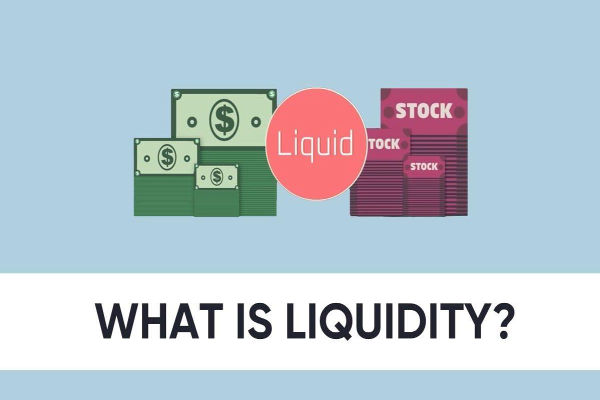
In simple terms, it measures how quickly you can convert something you own into cash. Highly liquid assets are those that can be traded swiftly at or near their market value.
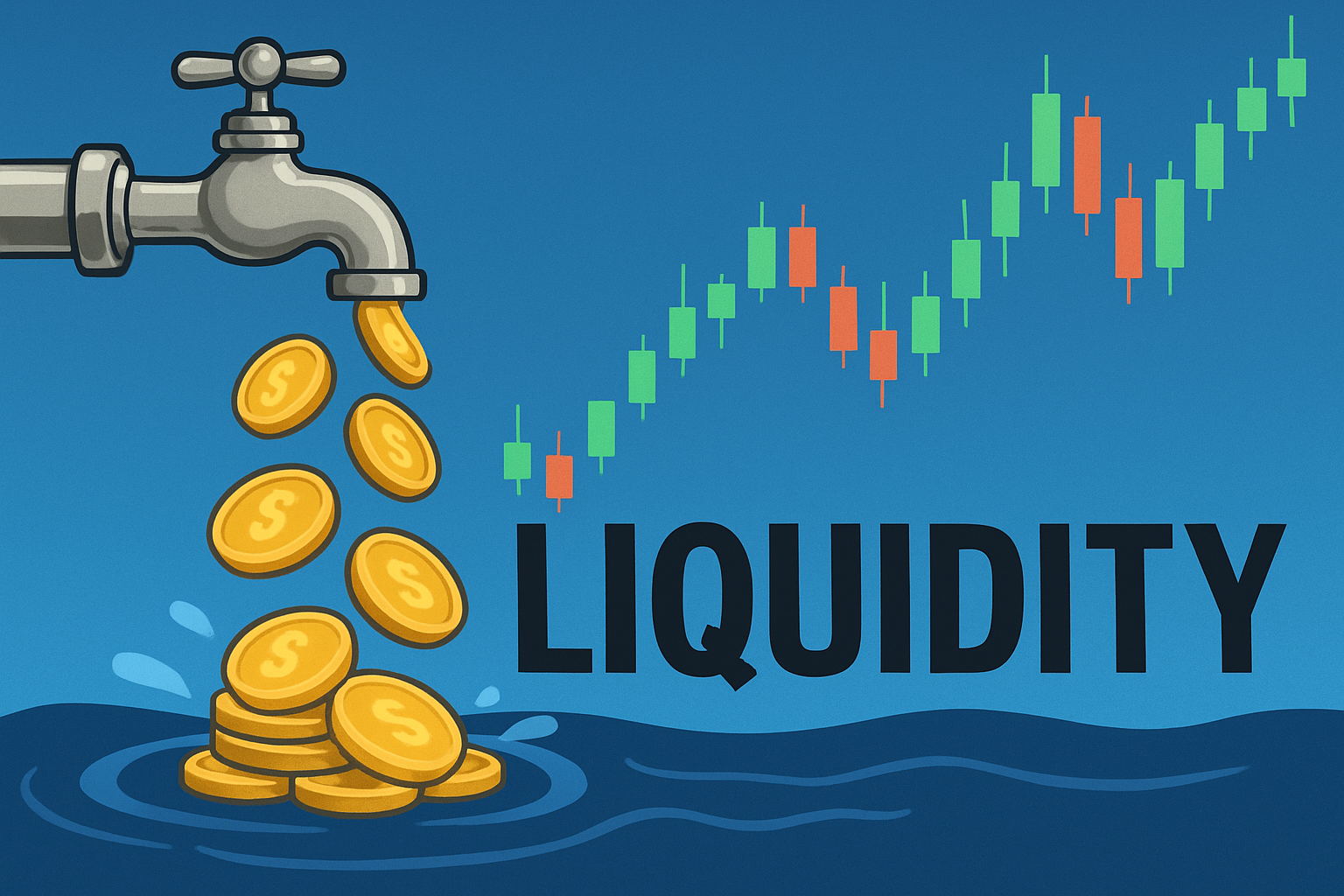
Liquidity is the degree to which an asset or security can be quickly converted into cash with minimal loss of value.
High liquidity means there are many buyers and sellers, making transactions smooth and fast (e.g., major currency pairs or large-cap stocks).
Low liquidity means few participants and slower transactions, often leading to larger price swings (e.g., small-cap stocks or rare collectibles).
Liquidity can also refer to market liquidity (how easy it is to trade an asset) or account liquidity (how much cash or credit a trader has available).
Liquidity depends on market activity such as the number of active participants and the volume of trades. The more buyers and sellers in a market, the easier it is to match orders and maintain stable prices.
Here’s how liquidity works in practice:
A trader places an order to buy EUR/USD.
The broker’s system checks for available sellers in the interbank market.
Because EUR/USD is one of the most traded currency pairs, there are many counterparties.
The trade executes instantly at the quoted price, showing high liquidity.
In contrast, if a trader tries to sell a rare corporate bond, it may take longer to find a buyer, and they might need to accept a lower price, a sign of low liquidity.
High Liquidity: The foreign exchange (forex) market is the most liquid in the world, with over USD 7 trillion traded daily. Major pairs like EUR/USD or USD/JPY can be bought or sold instantly with tight spreads.
Low Liquidity: During the 2008 financial crisis, many mortgage-backed securities became illiquid and because there were no willing buyers, it forced sellers to take steep discounts.
Liquidity Provider: A financial institution or market participant that offers buy and sell quotes to maintain market liquidity.
Liquidity Risk: The danger of not being able to sell an asset quickly without a major price loss.
Market Depth: The volume of buy and sell orders at various prices, where a deeper market means higher liquidity.
Bid-Ask Spread: The difference between the buying (bid) and selling (ask) price, meaning that narrower spreads signal higher liquidity.
Liquidity ensures that trades can be executed quickly and at fair prices. Without it, traders risk slippage or being unable to exit positions efficiently.
Higher liquidity usually leads to tighter spreads and lower transaction costs, while low liquidity can cause wider spreads and slippage.
Yes. Liquidity often drops during off-market hours, holidays, or financial crises when fewer participants are active.
Liquidity measures how easily an asset can be traded without affecting its price. High liquidity provides smoother execution, tighter spreads, and more stable pricing, while low liquidity can lead to delays and volatility. It’s a key factor in assessing market efficiency, especially in forex and equity trading.
Disclaimer: This material is for general information purposes only and is not intended as financial, investment, or other advice. No opinion expressed here constitutes a recommendation that any particular strategy or investment is suitable for any individual.


World's Best Broker








EBC Financial Group is a co-brand shared by a group of entities
including:
EBC Financial Group (SVG) LLC is authorized by the St.Vincent and the
Grenadines Financial Services Authority(SVGFSA),and the company
registration number is 353 LLC 2020, with registered address at Euro
House, Richmond Hill Road, Kingstown, VC0100, St. Vincent and the
Grenadines.
Other Relevant Entities
EBC Financial Group (UK) Limited is authorised and regulated by the
Financial Conduct Authority. Reference Number: 927552. Website: www.ebcfin.co.uk
EBC Financial Group (Cayman) Limited is licensed and regulated by the
Cayman Islands Monetary Authority (Number: 2038223). Website:
www.ebcgroup.ky
EBC Financial (MU) Limited is licensed and regulated by the the
Financial Services Commission, Mauritius (License Number GB24203273)
with registrated address at 3rd Floor, Standard Chartered Tower,
Cybercity, Ebene, 72201, Republic of Mauritius. Website for this entity
is maintained separately.
EBC Financial Group (Comoros) Limited is authorised by The Autonomous
Island of Anjouan, Union of Comoros Offshore Finance Authority with
License number L 15637/EFGC, with registered office address at Hamchako,
Mutsamudu, Autonomous Island of Anjouan, Union of Comoros.
EBC Financial Group (Australia) Pty Ltd (ACN: 619 073 237) is authorised
and regulated by the Australian Securities and Investments Commission
(Number: 500991). EBC Financial Group (Australia) Pty Ltd is a related
entity of EBC Financial Group (SVG) LLC. The two entities are managed
separately. The financial products and services offered on this website
are NOT provided by the Australian entity and no recourse against the
Australian entity is available.
EBC Group (Cyprus) Ltd, faciliates payment services to the licensed and
regulated entities within the EBC Financial Group strucutre, registered
under the Companies Law of Republic of Cyprus with the number HE 449205,
registered office address at 101 Gladstonos, Agathangelou Business
Centre, 3032 Limassol, Cyprus.
Business Address: The Leadenhall Building, 122 Leadenhall Street, London, United Kingdom, EC3V 4AB. Email Address :cs@ebc.com . Telephone : +44 20 3376 9662
Regional Restrictions:
EBC does not offer any services to citizens and residents of certain
jurisdictions including: Afghanistan, Belarus, Burma (Myanmar), Canada,
Central African Republic, Congo, Cuba, Democratic Republic of the Congo,
Eritrea, Haiti, Iran, Iraq, Lebanon, Libya, Malaysia, Mali, North Korea
(Democratic People's Republic of Korea), Russia, Somalia, Sudan, South
Sudan, Syria, Ukraine (including Crimea, Donetsk, and Luhansk Regions),
the United States, Venezuela, and Yemen.
Any Spanish on this website is for LATAM only and is not designated for
anyone in European Union or Spain For more information, please check out
our FAQs.
Any Portuguese on this website is for Africa only, and is not designated
for anyone in European Union or Portugal or Brazil. For more
information, please check out our FAQs.
Compliance Disclosure:The website can be accessed globally and is not specific to any entity. Your actual rights and obligations will be determined based on the entity and jurisdiction that you choose to be regulated.There may be local laws and regulations which prohibit or limit your rights to access, download, distribute, disseminate, share or otherwise use any or all of the documents and information published on this website.
Risk Warning: Trading Contracts for Difference (CFDs) are complex financial instruments and come with a high risk of losing money rapidly due to leverage. Trade on margin carries a high level of risk and may not be suitable for all investors. Before deciding to trade Forex and CFDs, you should carefully consider your trading objectives, level of experience and risk appetite. The possibility exists that you could sustain a loss of some or all of your initial trading capital. We recommend that you seek independent advice and ensure you fully understand the risks involved before making any investment decision. Please read the relevant risk disclosure statements carefully before trading.