Published on: 2025-08-29
Updated on: 2025-09-02
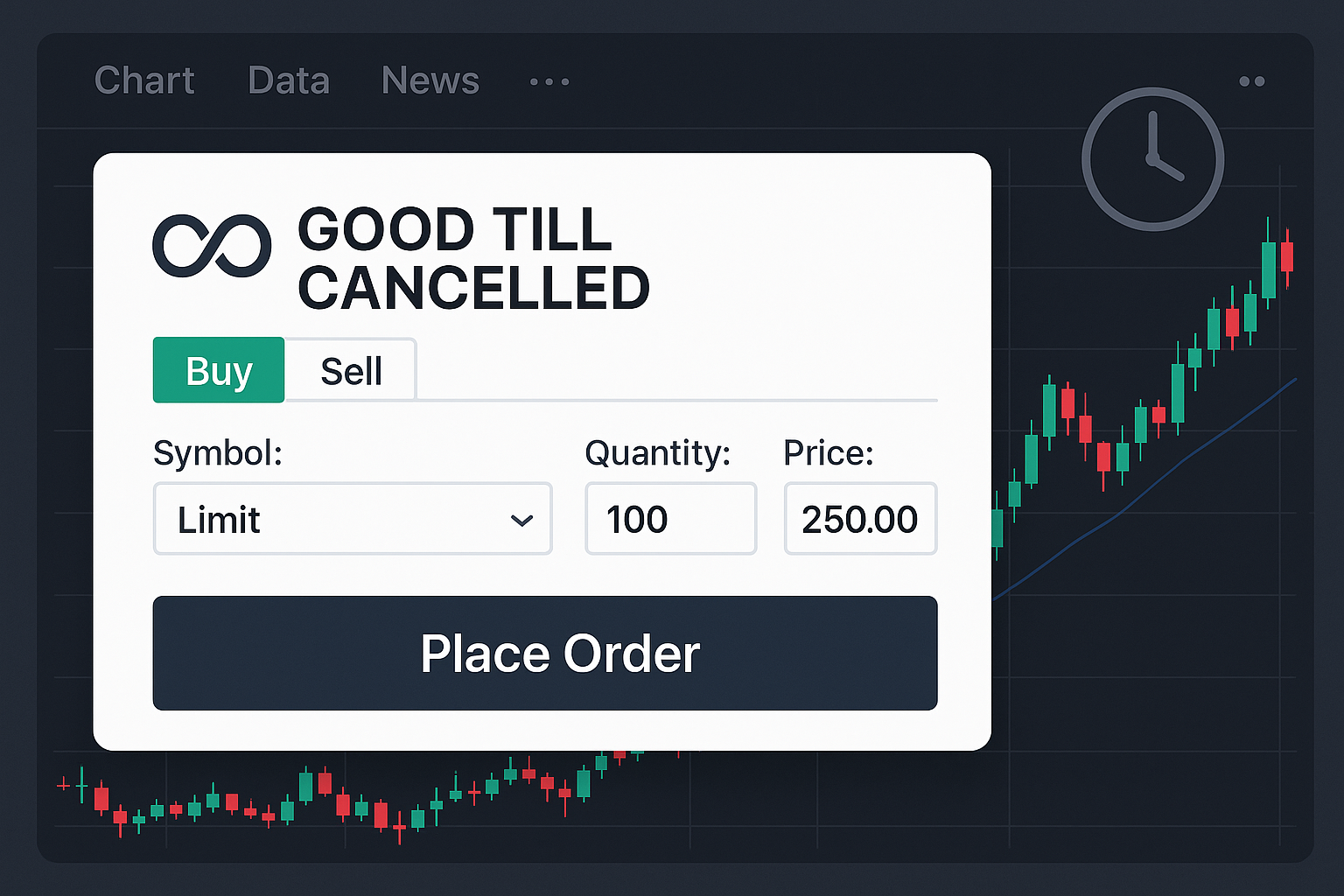
A Good Till Cancelled (GTC) order is an instruction to buy or sell at a specified price that remains active until it fills, is cancelled, or hits a broker's time limit (often 30–90 days).
It is “worth the fees” when it prevents missed entries or exits and reduces daily admin, provided broker expiries, partial‑fill charges, spreads, and overnight gap risks are reviewed and controlled.
This differs from a day order, which expires at the end of the session and must be re‑entered if still desired, increasing admin and the chance of missing levels.
GTC lets planned limit or stop levels work across days or weeks, so trades trigger without constant monitoring, which supports rules‑based execution for swing and part‑time traders.
Anchoring orders at predefined prices reduces the chance of missing setups during off‑screen hours while curbing reactive intraday decisions that can undermine consistency.
| Situation | Why It Helps | Risk Or Trade-Off | What To Consider |
|---|---|---|---|
| Limited screen time | Orders work while away, reducing re-entry admin | Fewer discretionary tweaks intraday | Set alerts and review order age weekly |
| Staged pullback entries | Captures dips at predefined prices automatically | May fill during brief volatility spikes | Pair with thesis checks before leaving live |
| Multi-day targets | Keeps exits live across sessions to secure profit | Partial fills can span days and affect fees | Check the fee logic for multi-day executions |
| Event/catalyst periods | No need to chase; orders trigger if levels print | Gaps can skip levels and worsen fills | Size for gap risk and adjust around news |
| Illiquid/wide-spread names | — | Higher slippage and adverse selection risk | Prefer liquid instruments and tighten lists |
Scan near the close, validate the level and any relevant news, and confirm the thesis still stands before leaving GTCs live across sessions.
Size risk, place GTC limit/stop orders with clear cancel/replace rules, log order age, and set alerts; review open orders at least weekly for staleness.
Example:
A trader wants ABC at $45 while it trades at $50, so sets a GTC limit buy at $45 with a 60‑day broker expiry; if the price touches $45 within the window, it fills automatically.
If the order fills in parts across multiple days, some brokers charge per execution day, so the total commission may differ from a single‑fill scenario—check the schedule.
Confirm broker GTC expiry defaults (e.g., 30–90 days) and internal handling if the exchange does not accept native GTCs.
Prefer liquid tickers and realistic levels to reduce spread/slippage and unintended triggers from transient spikes.
Document cancel/replace rules by order age, volatility regime, and upcoming events to avoid stale orders.
Set alerts for price proximity and major news; re‑evaluate the thesis before keeping orders live through catalysts.
Track partial fills and fees; consolidate where possible to minimise per‑day execution costs.
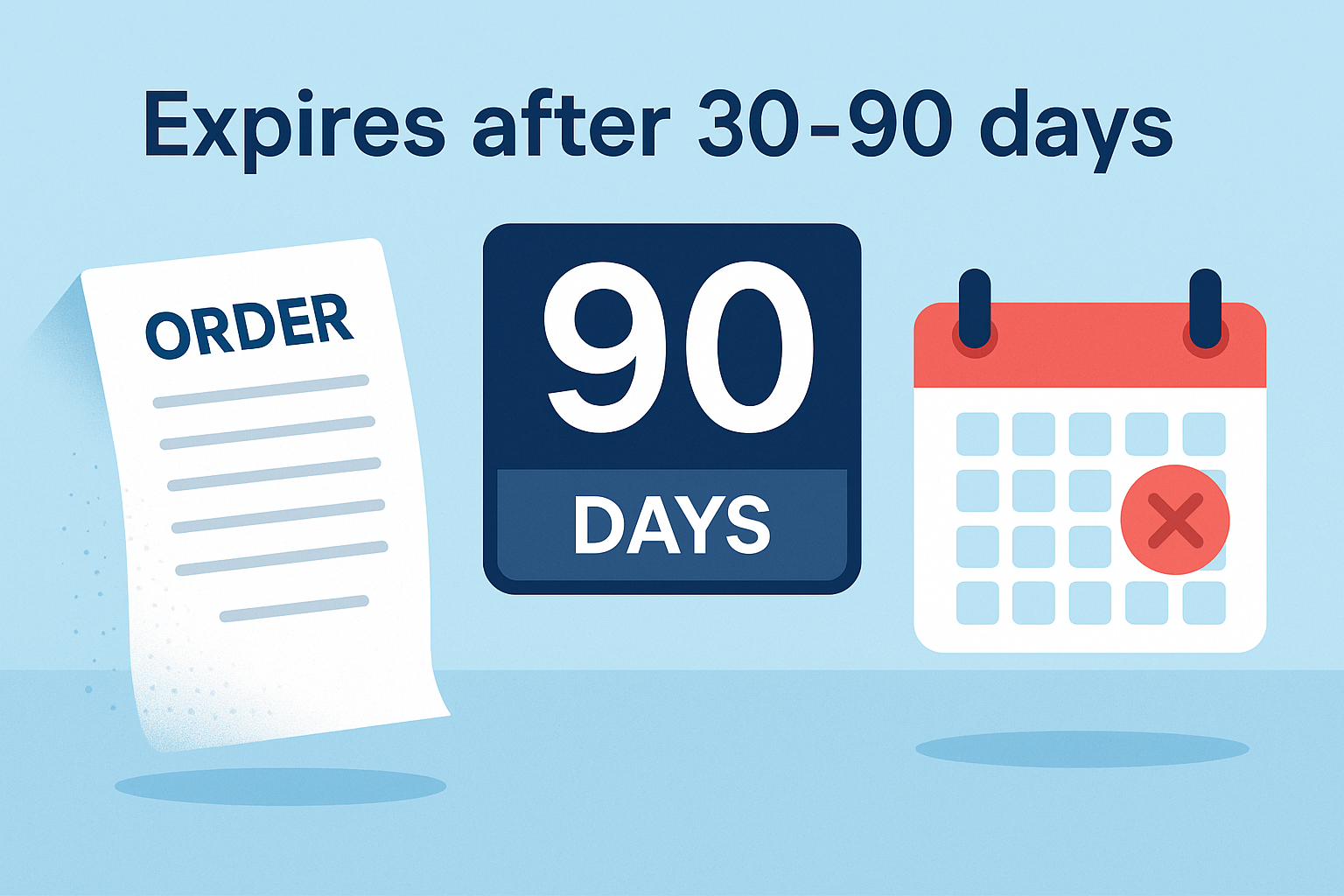
Brokers commonly auto‑expire GTC orders after 30–90 days, so diarise renewals and avoid “forgotten” orders executing after conditions change.
Some venues no longer accept native GTC; many brokers simulate them internally, making it important to understand routing, expiry, and how stops/limits are handled.
Fees can accrue per execution day when orders fill in parts, and wide spreads near the open/close can add friction—prefer liquid instruments and review fee tables.
Overnight gaps can jump entries or stops; use volatility‑aware placement and smaller size around known catalysts to control slippage and adverse fills.
“GTC Lasts Forever” → Most brokers auto‑expire within 30–90 days; log renewal dates and confirm platform defaults to avoid surprises.
“Set‑And‑Forget Is Safe” → GTC reduces admin, not oversight; review weekly and cancel/replace after news or regime shifts to prevent stale fills.
“Costs Are The Same” → Multi‑day partial fills can change total commissions; confirm how fees accrue and prefer liquid tickers to reduce spread costs.
“Stops Behave Identically Overnight” → Gaps can skip levels; plan ATR‑ or volatility‑aware placement and size positions to keep risk constant.
“Exchanges Always Honour GTC” → If a venue doesn't accept native GTC, brokers simulate it; know your broker's routing and expiry rules.
Day Order: Expires at session end if unfilled, requiring re‑entry the next day to maintain intent.
Limit Order: Executes at a set price or better; commonly paired with GTC for entries and exits.
Stop Order: Triggers a market/limit order once the stop price is reached; GTC stops can activate on gaps.
Immediate‑Or‑Cancel (IOC): Fills available quantity immediately and cancels the rest, contrasting with GTC's extended duration.
Pros codify cancel/replace logic by order age, upcoming catalysts, and volatility regime, and they pair GTC levels with ATR‑scaled stops and position sizing to stabilise per‑trade risk.
Execution quality hinges on liquidity and handling; measure slippage versus model, understand if GTC is native or simulated, and adjust instruments, venues, or order types accordingly.
GTC can be “worth the fees” when it prevents missed trades, reduces daily admin, and executes planned levels—so long as expiries, partial‑fill costs, spreads, and gap risks are actively managed.
Treat it as a convenience and discipline tool: keep orders fresh with scheduled reviews, size for volatility, and know broker rules so the benefits outweigh the frictions across sessions.



World's Best Broker