Published on: 2023-08-03
Updated on: 2024-05-29
Forward and reverse exchange are commonly used terms in international trade and foreign exchange transactions to describe the direction and method of currency exchange. They play an important role in the money market and have a certain impact on both businesses and individuals.
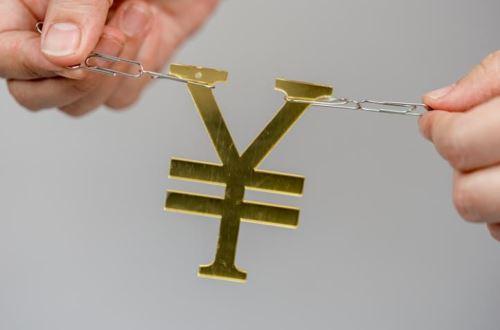
Firstly, let's understand the concept of Shunhui which is currency conversion. Currency conversion refers to the exchange of domestic currency into foreign currency, which means that the exporter exchanges the payment made by the foreign buyer into their own local currency. For example, Chinese companies convert the US dollars earned from products sold to American customers into Chinese yuan, which is a form of forward exchange. Currency conversion helps to promote export trade and increase foreign exchange reserves, which has a positive impact on the country's economic development.
Correspondingly, reverse exchange refers to the conversion of foreign currency into domestic currency, in which the importer converts the payment made to the foreign supplier into cost currency. For example, when Chinese companies purchase raw materials from American suppliers, they need to exchange RMB into US dollars to pay the suppliers, which is a reverse exchange operation. Reverse remittance plays a role in paying for goods in trade and can help enterprises carry out import business.
There is a close connection between forward and backward convergence. They have complementary relationships in two directions during the currency exchange process. In international trade, exports and imports often complement each other and require two-way currency exchange. The frequent occurrence of forward and reverse remittances has promoted the liquidity of the money market and the smooth progress of international trade. In addition, both forward and reverse remittances need to closely monitor market trends and exchange rate fluctuations in order to make correct trading decisions.
However, there are also some differences between forward and reverse mergers. Firstly, currency conversion is usually led by exporters, who convert foreign exchange earnings into local currency to maintain daily operations and funding needs. Reverse remittance is mainly carried out by importers, who need to convert their local currency into foreign exchange to pay for the goods. Secondly, the positive exchange rate is more dependent on the supply and demand relationship and exchange rate fluctuations in the forex market, while the negative exchange rate is more affected by domestic economic policies and foreign exchange controls.
Currency conversion is carried out in pursuit of profit, and investors hope for the appreciation of foreign currencies to obtain price difference returns. Reverse exchange is carried out to reduce risk or recover funds, and investors hope for foreign currency depreciation or to transfer funds back to their home country. Forward exchange transactions often come with higher risks and potential losses, as foreign currencies may experience reverse fluctuations, while reverse exchange transactions are relatively conservative.
In addition, forward and reverse remittances also involve the management of Foreign exchange risk. Due to fluctuations in exchange rates, forward and reverse exchange operations may have an impact on the earnings of enterprises and individuals. Therefore, in order to avoid risks, many companies will adopt hedging and other measures to lock in exchange rates to ensure the stability and predictability of currency exchange.
Disclaimer: Investment involves risk. The content of this article is not an investment advice and does not constitute any offer or solicitation to offer or recommendation of any investment product.
World's Best Broker
EBC Financial Group is a co-brand shared by a group of entities
including:
EBC Financial Group (SVG) LLC is authorized by the St.Vincent and the
Grenadines Financial Services Authority(SVGFSA),and the company
registration number is 353 LLC 2020, with registered address at Euro
House, Richmond Hill Road, Kingstown, VC0100, St. Vincent and the
Grenadines.
Other Relevant Entities
EBC Financial Group (UK) Limited is authorised and regulated by the
Financial Conduct Authority. Reference Number: 927552. Website: www.ebcfin.co.uk
EBC Financial Group (Cayman) Limited is licensed and regulated by the
Cayman Islands Monetary Authority (Number: 2038223). Website:
www.ebcgroup.ky
EBC Financial (MU) Limited is licensed and regulated by the the
Financial Services Commission, Mauritius (License Number GB24203273)
with registrated address at 3rd Floor, Standard Chartered Tower,
Cybercity, Ebene, 72201, Republic of Mauritius. Website for this entity
is maintained separately.
EBC Financial Group (Comoros) Limited is authorised by The Autonomous
Island of Anjouan, Union of Comoros Offshore Finance Authority with
License number L 15637/EFGC, with registered office address at Hamchako,
Mutsamudu, Autonomous Island of Anjouan, Union of Comoros.
EBC Financial Group (Australia) Pty Ltd (ACN: 619 073 237) is authorised
and regulated by the Australian Securities and Investments Commission
(Number: 500991). EBC Financial Group (Australia) Pty Ltd is a related
entity of EBC Financial Group (SVG) LLC. The two entities are managed
separately. The financial products and services offered on this website
are NOT provided by the Australian entity and no recourse against the
Australian entity is available.
EBC Group (Cyprus) Ltd, faciliates payment services to the licensed and
regulated entities within the EBC Financial Group strucutre, registered
under the Companies Law of Republic of Cyprus with the number HE 449205,
registered office address at 101 Gladstonos, Agathangelou Business
Centre, 3032 Limassol, Cyprus.
Business Address: The Leadenhall Building, 122 Leadenhall Street, London, United Kingdom, EC3V 4AB. Email Address :cs@ebc.com . Telephone : +44 20 3376 9662
Regional Restrictions:
EBC does not offer any services to citizens and residents of certain
jurisdictions including: Afghanistan, Belarus, Burma (Myanmar), Canada,
Central African Republic, Congo, Cuba, Democratic Republic of the Congo,
Eritrea, Haiti, Iran, Iraq, Lebanon, Libya, Malaysia, Mali, North Korea
(Democratic People's Republic of Korea), Russia, Somalia, Sudan, South
Sudan, Syria, Ukraine (including Crimea, Donetsk, and Luhansk Regions),
the United States, Venezuela, and Yemen.
Any Spanish on this website is for LATAM only and is not designated for
anyone in European Union or Spain For more information, please check out
our FAQs.
Any Portuguese on this website is for Africa only, and is not designated
for anyone in European Union or Portugal or Brazil. For more
information, please check out our FAQs.
Compliance Disclosure:The website can be accessed globally and is not specific to any entity. Your actual rights and obligations will be determined based on the entity and jurisdiction that you choose to be regulated.There may be local laws and regulations which prohibit or limit your rights to access, download, distribute, disseminate, share or otherwise use any or all of the documents and information published on this website.
Risk Warning: Trading Contracts for Difference (CFDs) are complex financial instruments and come with a high risk of losing money rapidly due to leverage. Trade on margin carries a high level of risk and may not be suitable for all investors. Before deciding to trade Forex and CFDs, you should carefully consider your trading objectives, level of experience and risk appetite. The possibility exists that you could sustain a loss of some or all of your initial trading capital. We recommend that you seek independent advice and ensure you fully understand the risks involved before making any investment decision. Please read the relevant risk disclosure statements carefully before trading.