Published on: 2023-08-07
Updated on: 2024-03-29
A forward exchange rate refers to a form of exchange rate in the foreign exchange market used to agree on a currency exchange rate for a certain future date. It is a standard used by market participants to conduct foreign exchange transactions on future delivery dates based on supply and demand relationships and other factors. The forward exchange rate is different from the spot exchange rate and the cash exchange rate. The spot exchange rate refers to the exchange rate used for immediate foreign exchange transactions, while the cash exchange rate refers to the exchange rate used for immediate foreign exchange purchases or sales.
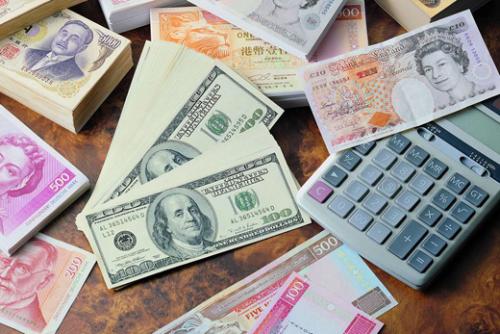
Forward exchange rates play an important role in international trade and investment as they provide a way to determine future transaction costs or benefits. Forward exchange rates are usually determined through negotiation between buyers and sellers in the foreign exchange market and are communicated and negotiated based on their expected future exchange rate trends, interest rate differences, political and economic factors, etc. The buyer and seller will enter into a contract to exchange and deliver currency at a specific exchange rate at a future date.
The use of forward exchange rates helps businesses and investors manage risks. For example, an exporter can use forward exchange rates to lock in the foreign exchange rate for future deliveries to protect themselves from exchange rate fluctuations. Similarly, an importer can also use forward exchange rates to mitigate future exchange rate risks and ensure that the required currency is purchased at a predictable cost on the delivery date. In addition, investors can also use forward exchange rates to engage in foreign exchange speculation or arbitrage trading in order to obtain profits.
The forward exchange rate is based on the spot exchange rate, which is represented by the "premium", "discount", and "parity" of the spot exchange rate.
In general, the pricing method for forward exchange rates is to only indicate the forward premium or discount. In the case of the direct pricing method, if the forward exchange rate is a premium, the forward exchange rate is calculated by adding the premium to the spot exchange rate. If it is a forward discount, subtract the discount amount from the spot exchange rate to obtain the forward exchange rate. In the case of the indirect pricing method, on the contrary, if the forward exchange rate is a premium, the premium should be subtracted from the spot exchange rate to obtain the forward exchange rate. If it is a forward discount, the discount amount should be added to the spot exchange rate, which is the forward exchange rate.
Forward exchange rates also have buying and selling prices, so there are two numbers for the premium or discount of forward exchange rates. In the case of the direct pricing method, if the forward exchange rate is a premium, the decimal part of the premium is added to the buying price of the spot exchange rate, and the large part of the premium is added to the selling price of the spot exchange rate. Under the indirect pricing method, if there is a forward premium, the selling price at the spot exchange rate is subtracted from the larger premium, and the buying price at the spot exchange rate is subtracted from the decimal premium. In the case of indirect pricing, if the number of forward premiums is the large number before and the decimal number after, it indicates that it is a forward premium. If the decimal number comes first and the large number comes last, it indicates a long-term discount.
The forward exchange rate only has a contractual nature and does not represent the actual exchange rate, which may change at the delivery date. In addition, forward exchange rate transactions usually require the payment of a certain margin or fee to ensure the performance of the transaction and compliance with the contract. Therefore, before using forward exchange rates for trading, participants need to understand the relevant risks and contract terms and make decisions based on their own needs and risk tolerance.
Disclaimer: Investment involves risk. The content of this article is not an investment advice and does not constitute any offer or solicitation to offer or recommendation of any investment product.