Published on: 2025-08-29
Updated on: 2025-09-02
Day trading is a trading strategy where individuals buy and sell financial instruments — such as stocks, currencies, or futures — within the same trading day. The goal is to profit from short-term price movements, with all positions typically closed before the market closes to avoid overnight risk. Day traders often rely on technical analysis and fast decision-making.
Day trading is significant because it offers the potential for quick profits by capitalising on small price changes throughout the day. It attracts active traders who enjoy fast-paced environments and have the time and tools to monitor markets closely. Understanding day trading helps traders diversify their strategies and manage the higher risks associated with short-term market fluctuations.
However, day trading requires discipline, a solid risk management plan, and a deep understanding of market dynamics. Without proper preparation, traders risk substantial losses given the leverage often used and the rapid nature of trades.
Imagine a trader notices that shares of Company XYZ are trading at $50 at the market open. Believing the price will rise during the day based on technical signals, the trader buys 100 shares at $50 each, spending $5,000. By midday, the price climbs to $52. The trader sells all 100 shares, receiving $5,200. The profit from this day trade is $200 (excluding fees and commissions), all achieved within a single trading session.
This example shows how profit margins in day trading can be relatively small per trade, necessitating careful transaction cost management and high trade volumes or leveraging to make meaningful gains.
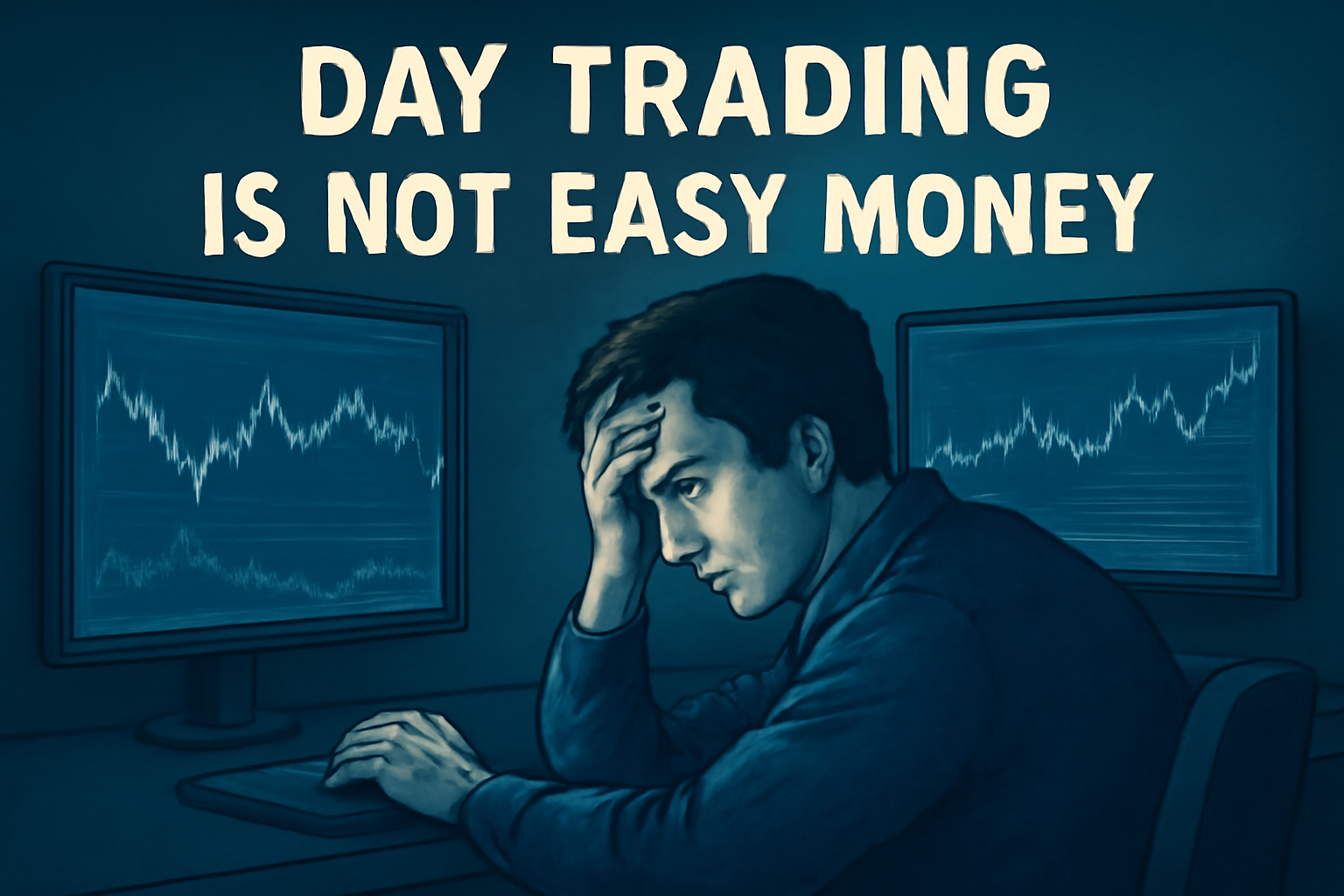
“Day trading is easy money”: Many beginners falsely assume day trading guarantees quick profits. In reality, significant skill, discipline, and preparation are needed to be consistently profitable.
Ignoring transaction costs: Day trading often involves frequent transactions. Without managing broker commissions, spreads, and fees, these costs can significantly erode profits or even result in losses.
Not using stop-loss orders: Failing to set stop-losses can expose traders to heavy losses if prices move unfavourably.
Overtrading: Excessive trading in a day increases risk and can lead to burnout or poor decision-making.
To succeed, day traders often specialise in specific strategies, such as:
Momentum Trading: Capitalising on strong price moves driven by news or market sentiment. Traders buy securities showing strong upward or downward trends and exit as momentum fades.
Breakout Trading: Entering positions when the price breaks through key support or resistance levels, anticipating continued movement in the breakout direction.
Scalping: Focusing on very short time frames, scalpers aim to capture tiny price movements by entering and exiting trades within seconds or minutes, often making many trades in a day.
Reversal Trading: Seeking reversals or “pullbacks” within trends by identifying points where the price is likely to change direction.
Each strategy comes with unique risks and requires different levels of speed, attention, and analysis.
Day traders rely on a suite of tools to execute trades efficiently and make quick decisions:
Real-Time Market Data and News: Speedy access to market data and breaking news is critical for spotting opportunities and avoiding surprises.
Level 2 Quotes / Order Book Analysis: Gives insight into current market depth and pending orders which can signal price support or resistance.
Charting Software and Technical Indicators: Tools like moving averages, RSI, MACD, Bollinger Bands, and volume indicators help identify entry and exit points.
Trading Platform with Fast Execution: A reliable platform reduces slippage and supports order types like limit, market, stop-loss, and trailing stops.
Risk Management Tools: Automated stop-loss and take-profit orders help manage potential losses and lock in gains.
Day trading is mentally demanding. Traders face:
Stress and Emotional Bias: Rapid decisions and financial risk can trigger fear and greed, leading to impulsive trades.
Discipline to Stick to Plans: Skipping analysis or trading outside strategy often results in losses.
Dealing with Losses: Professionals manage losses calmly and don't let a bad trade derail their mindset.
Building mental resilience through practice, journalling trades, and having clear rules is as important as technical skills.
Given the fast pace and leverage commonly involved, risk management is vital:
Set a Risk per Trade Limit: Typically 1-2% of trading capital.
Use Stop-Loss Orders: Defines a maximum acceptable loss on each trade.
Diversify Trade Entry Times or Instruments: Avoid tying up too much capital in one trade or time frame.
Limit Daily Loss Thresholds: Avoid trading after hitting predetermined loss limits to prevent emotional decisions.
Swing Trading: Holding positions over several days/weeks to capture medium-term moves. Less frenetic than day trading.
Scalping: Ultra-short-term trading, often seconds to minutes, targeting very small price changes.
Stop-Loss Order: An automatic order to sell at a specific price to limit losses.
Margin Trading: Using borrowed money to increase trade size, amplifying potential profits and losses.
While day trading offers the allure of quick profits, professional traders know it demands a blend of:
Robust Strategy: Clearly defined entry and exit rules improve consistency.
Speed and Precision: Use technology and platforms that enable fast execution.
Strict Risk Controls: Protect capital by managing position sizes and employing stop-losses.
Continuous Learning: Market conditions evolve, so ongoing education and adaptation are essential.
Emotional Control: The ability to manage stress and avoid impulsive trades separates winners from losers.
Professionals treat day trading as a business, emphasising preparation and process over quick wins or guesswork.
Day trading can be rewarding but is challenging without preparation and discipline. With the right mindset, tools, and strategy, traders can navigate the fast markets more confidently and protect their capital effectively.



World's Best Broker