Published on: 2025-08-29
Updated on: 2025-09-02
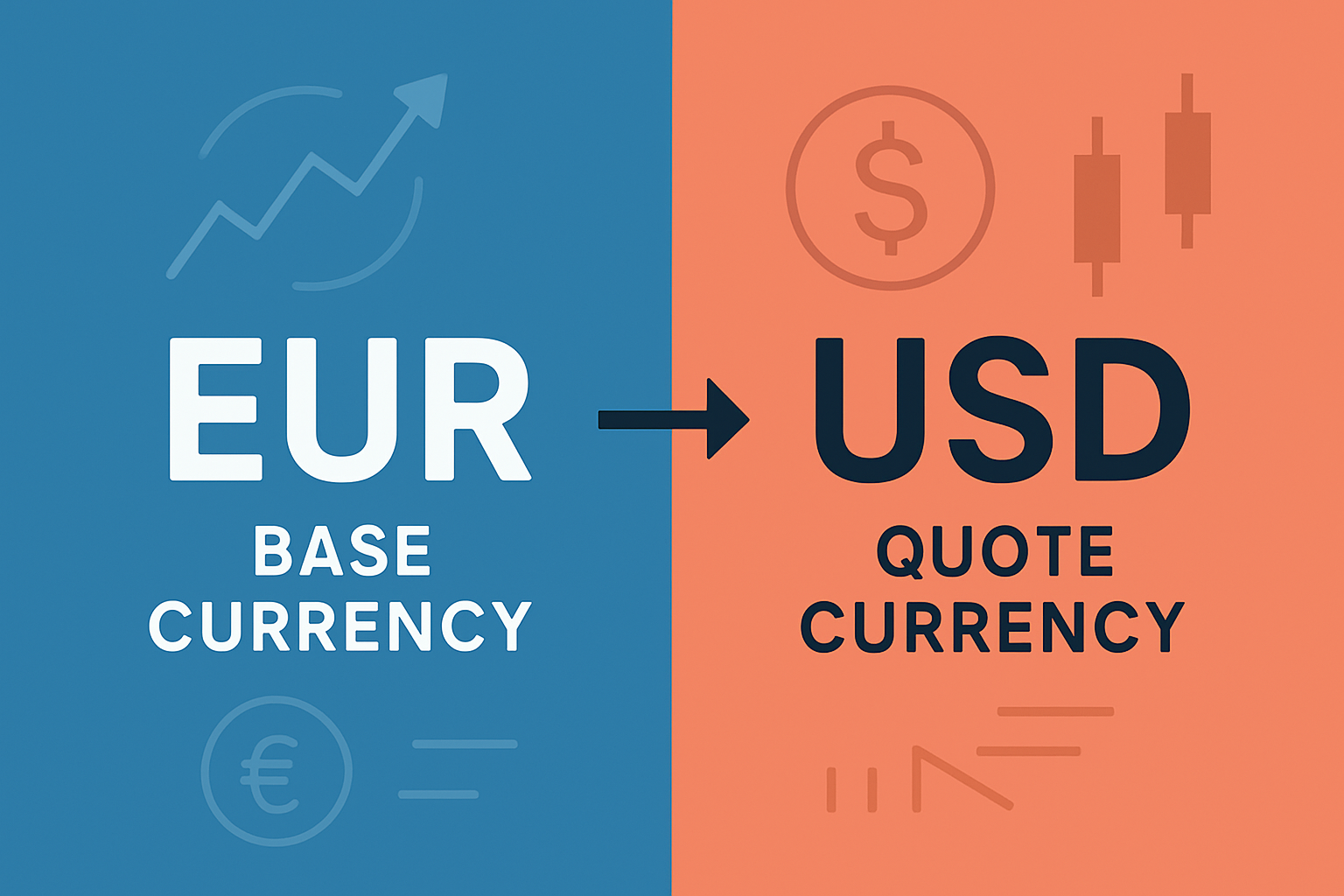
A base currency is the first currency listed in a currency pair. It serves as the reference point for the value of the second currency, known as the quote currency. When you trade forex, the base currency is what you are buying or selling. In EUR/USD, for instance, the euro (EUR) is the base currency and the US dollar (USD) is the quote currency. You always trade one unit of the base currency against a variable amount of the quote currency.
Most pairs follow market conventions: the euro is always listed first in euro pairs, the pound often comes first in GBP pairs, and the US dollar is not always the base. These naming standards make comparison and trading consistent across platforms.
The base currency determines how currency pairs are quoted.
All profit and loss calculations in a trade start with the base, not the quote, currency.
Understanding the base currency is essential for tracking returns, managing risk, and making sense of your forex exposure.
If your account is in a different currency from the base, conversions may affect your actual profit or loss.
You see USD/JPY quoted at 150.00. Here, USD is the base, JPY is the quote. This means 1 USD equals 150 Japanese yen. Suppose you buy one lot (100,000 units) of USD/JPY. If the exchange rate moves from 150.00 to 155.00, your one lot is now worth 155 yen per USD instead of 150 yen—a profit if you close the trade. If the rate drops to 145.00, you'd face a loss.
If your trading account is in US dollars, gains and losses are clear. But if it's in British pounds, your final profit would change when converted back to GBP.
The base currency sets the lot size. For USD/JPY, one standard lot is 100,000 USD.
Margin requirements are calculated in the base currency.
If your account currency differs from the base, your broker will convert the required margin at the current rate.
A cross currency pair excludes your home currency and sometimes the US dollar. For example, EUR/JPY is a cross. When trading these, both profit and loss—and margin—might need to be converted twice if your account is set to another currency. This is important for global traders, as P&L is first determined in the base, then converted through the quote, and finally into your account's denomination.
Many brokers let you pick a base currency for your trading account.
Choosing a base currency that matches your home or main transaction currency can help you avoid extra conversion fees.
Tracking performance and managing deposits or withdrawals is simpler when your account base matches the main currency you use.
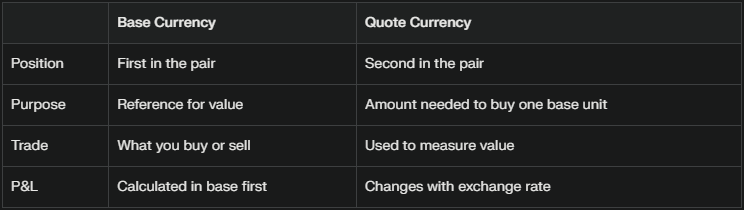
Mixing up base and quote: Some traders think the second currency is what is being bought or sold. In reality, trades always start with one unit of base currency.
Assuming USD is always the base: The US dollar is common, but the base can be any currency, depending on the pair.
Ignoring profit and loss conversion: If your account is not in the base currency, your real profit or loss depends on the currency exchange rate at settlement.
Overlooking home currency effect: Focusing only on pips or chart moves can be misleading if you don't consider conversion back to your account or home currency.
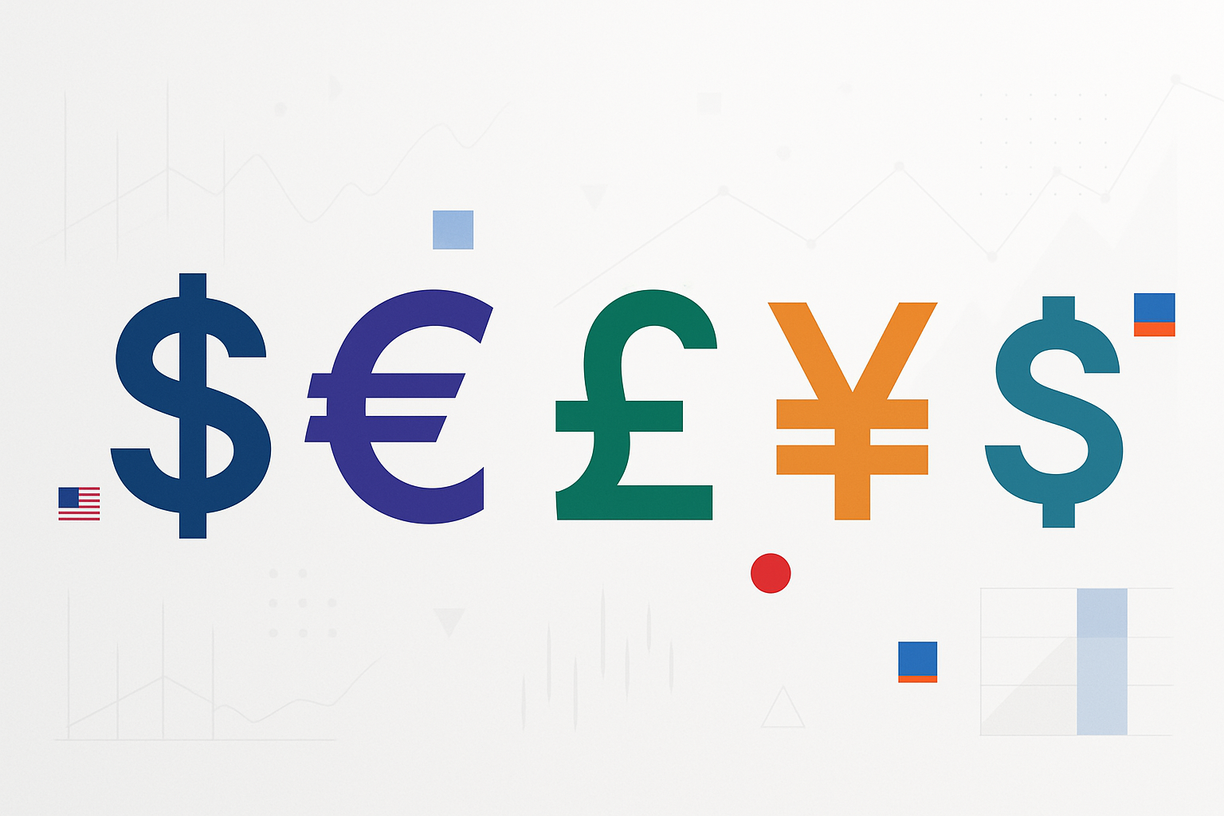
USD (US Dollar)
EUR (Euro)
GBP (British Pound)
JPY (Japanese Yen)
AUD (Australian Dollar)
These are widely used due to high liquidity, global economic influence, and broad trading volumes.
Quote Currency: The second currency in a pair, used to value the base.
Currency Pair: Two currencies traded together (e.g., GBP/USD).
Exchange Rate: The price of one currency in terms of another.
Pip: The smallest movement in a currency pair, often referencing changes in the value of the base.
Large institutions calculate exposure in base currencies to manage risk and hedge positions.
Cross currency trades and global portfolios require attention to how base and quote currencies interact with your account's denomination.
Advanced strategies use base currency conventions to optimise liquidity and execution, especially in high-frequency or large-size trading.
Understanding the base currency helps you read quotes, manage trades, and keep track of real profits or losses—core skills for anyone operating in forex or international markets.



World's Best Broker